The Best Fluffy Pancakes recipe you will fall in love with. Full of tips and tricks to help you make the best pancakes.


Table of Contents
Candied yams are a classic side dish made with sliced sweet potatoes slowly cooked in butter, brown sugar, and warm spices until tender and coated in a glossy, caramel-like sauce. This recipe is ideal for anyone who wants a reliable, homemade version that tastes rich and comforting without being overly sweet, sticky, or complicated.
This dish is especially popular during holidays and family gatherings, but it’s also simple enough to make for regular dinners when you want something warm and satisfying. What makes candied yams stand out is the balance between natural sweetness from the potatoes and the buttery syrup that forms as everything cooks together.
I’ve made candied yams this way for years, particularly for family dinners and festive meals, and this method has consistently given me the best results. It doesn’t rely on shortcuts or excessive sugar, and it’s very forgiving if you’re still learning how sweet potatoes behave during cooking. Even if this is your first time making candied yams, this approach helps you focus on texture and flavor without stress.
What This Candied Yams Recipe Is
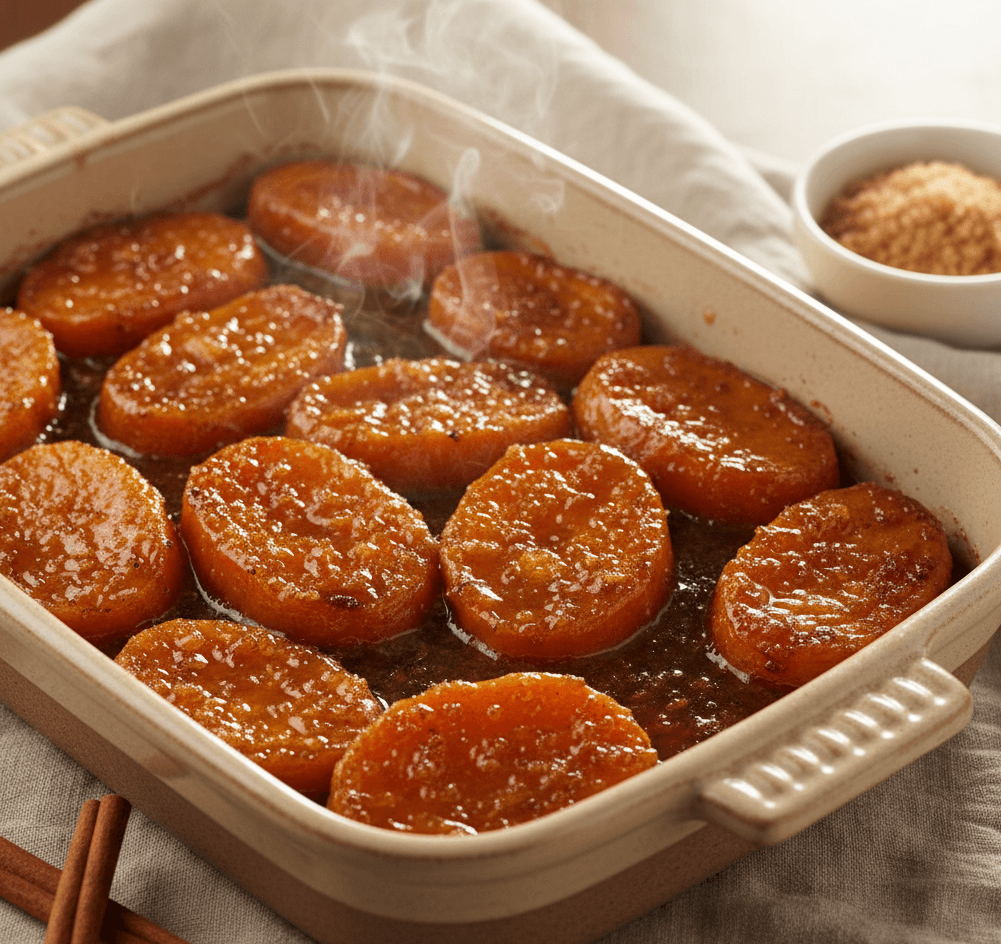
Candied yams are sweet potatoes cooked gently in a butter-and-sugar syrup until soft, flavorful, and lightly caramelized.
From a technical standpoint, this recipe works because the sugar dissolves into the butter and liquid, creating a syrup that thickens gradually as moisture evaporates. The sweet potatoes release their own natural sugars and starches as they cook, which helps the sauce cling to each slice instead of remaining thin.
One of the biggest misconceptions about candied yams is that they need high heat, marshmallows, or heavy spices to taste good. In reality, candied yams are about controlled heat and patience. When cooked slowly, the sweet potatoes absorb flavor evenly and stay intact, giving you a dish that looks and tastes intentional rather than overcooked or overly sweet.
Why Make Candied Yams at Home
Making candied yams at home gives you full control over sweetness, texture, and ingredients.
Many store-bought or pre-made versions rely on excessive sugar to mask bland or overcooked sweet potatoes. This often results in a dish that tastes one-note and has a mushy texture. When you cook candied yams at home, you can stop the cooking process exactly when the potatoes are tender, which makes a noticeable difference in both flavor and appearance.
Homemade candied yams are also more flexible. You can adjust the sugar level, change the spices, or even tweak the liquid depending on your taste or dietary needs. Over time, I’ve found that cooking them myself consistently produces a richer, more balanced dish using simple ingredients I already have, without sacrificing quality or tradition.
Key Ingredients and Why They Matter
The best place to start is with orange-fleshed sweet potatoes, which are commonly labeled as yams in many grocery stores.
Sweet potatoes form the base of the dish and provide natural sweetness, moisture, and structure. Butter adds richness and helps distribute flavor evenly as it melts into the sauce. Brown sugar contributes caramel notes and body to the syrup, while a small amount of liquid, such as water or orange juice, helps dissolve the sugar and prevents scorching during the early cooking stage.
Warm spices like cinnamon and nutmeg enhance the natural sweetness without overpowering it. A small pinch of salt is essential, as it balances the sugar and keeps the dish from tasting flat.
If brown sugar isn’t available, white sugar can be used with slightly more butter to compensate for flavor. Reducing the sugar will still produce a proper glaze, as sweet potatoes naturally sweeten the sauce as they cook.
Candied Yams Recipe
Course: SidesCuisine: Southern AmericanDifficulty: EasyServings
6
servingsPrep time
15
minutesCooking time
45
minutesTotal time
1
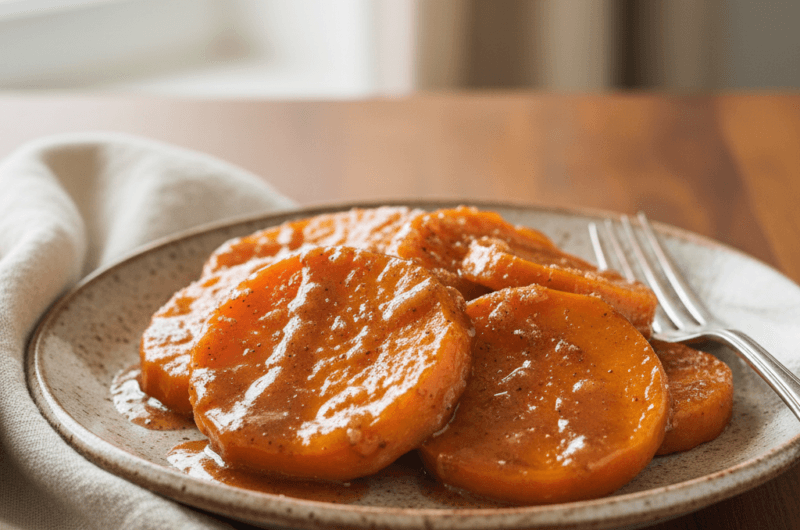
hourCandied yams are sliced sweet potatoes cooked in butter, sugar, and warm spices until soft and glossy. This recipe works because it balances sweetness, moisture, and gentle heat for consistent results.
Ingredients
Sweet potatoes
Butter
Brown sugar
Water or orange
- Optional Helpful Add-Ins
Cinnamon
Vanilla
A pinch of salt
Directions
- Preparing the Sweet Potatoes
Peel the sweet potatoes and slice them into evenly sized rounds. Keeping the slices uniform is important because it ensures they cook at the same pace. Uneven slices often lead to some pieces turning mushy while others stay undercooked. - Creating the Syrup Base
Butter, sugar, liquid, and spices are gently heated together until the sugar dissolves completely. This step forms the foundation of the sauce and prevents graininess later. Rushing this stage can affect the final texture. - Cooking the Yams Slowly
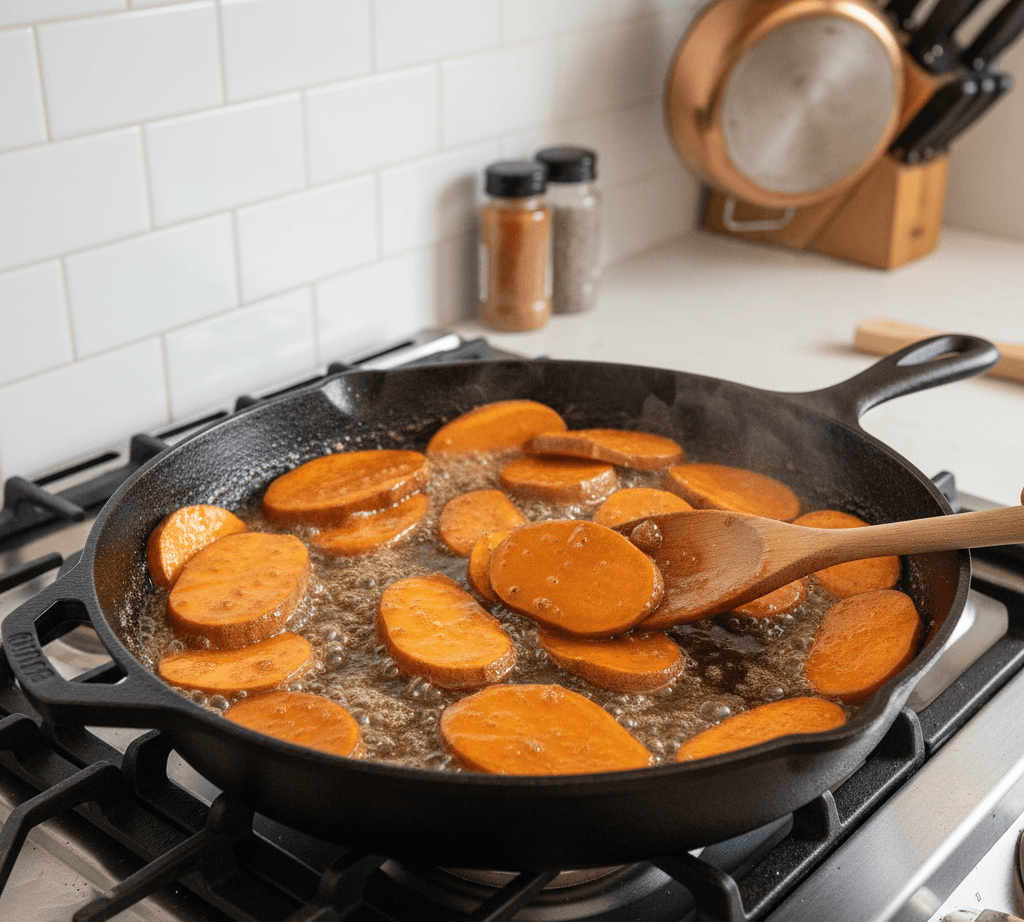
The sweet potatoes are added to the syrup and cooked covered at low heat. Covering the dish traps steam, which helps soften the yams without breaking them apart. This slow phase is where most of the tenderness develops. - Finishing the Dish
Once the sweet potatoes are tender, the lid is removed to allow excess moisture to evaporate. The sauce thickens naturally at this point and coats the yams evenly. Gentle handling during this stage keeps the slices intact.
Notes
- Most candied yam problems come from rushing the process or using heat that’s too high.
Sweet potatoes should be cooked gently so they soften without collapsing. If the heat is too high early on, the outside will break down before the inside is tender. The sauce should be allowed to thicken gradually, as rapid boiling can cause sugar to scorch and turn bitter.
Consistency matters more than exact timing, because sweet potatoes vary in size and moisture. I always check tenderness instead of relying on the clock. For first-time cooks, it’s better to slightly undercook and adjust than to overcook and lose structure.
If the sauce seems too thick while cooking, adding a small amount of liquid can correct it without affecting flavor. Letting the dish rest for a few minutes before serving also helps the glaze settle and coat the yams more evenly.
How to Know When Candied Yams Are Ready
Candied yams are ready when the sweet potatoes are fully tender but still holding their shape.
A fork should slide easily into the center of a slice without resistance, yet the slice should not fall apart when lifted. Visually, the sauce should appear glossy and cling to the yams rather than pooling thinly at the bottom.
The aroma is another indicator. Finished candied yams give off a warm, buttery scent with noticeable caramel notes. If the smell is sharp or burnt, the heat was likely too high. The sauce will continue to thicken slightly as it cools, so stopping at a lightly syrupy consistency is ideal.
Common Problems and Fixes
Why are my candied yams too soft?
This usually happens when the sweet potatoes are sliced too thin or cooked at high heat for too long. Thicker slices and lower heat help maintain structure.
Why is the sauce watery?
The syrup needs more uncovered cooking time. Allowing moisture to evaporate slowly will thicken the sauce naturally without adding more sugar.
Why does the sauce taste bitter?
Sugar may have scorched due to high heat. Lowering the temperature and stirring less frequently helps prevent burning.
Do I need to start over if something goes wrong?
In most cases, adjustments can fix the issue. Adding liquid, lowering heat, or allowing extra reduction time often solves the problem without restarting.
Storage and Maintenance
Short-Term Storage
Candied yams can be stored in an airtight container in the refrigerator for up to four days. For best texture, allow them to cool completely before sealing. This prevents condensation from thinning the sauce. When refrigerated properly, the flavors often deepen slightly, making leftovers just as enjoyable the next day.
Long-Term Storage
Candied yams can be frozen for up to two months. Freezing works best when the yams are fully cooled and stored with enough sauce to protect them from drying out. Thaw overnight in the refrigerator before reheating to help maintain texture and prevent splitting.
Reheating and Revival
Reheat candied yams slowly over low heat or in the oven, adding a small amount of butter or water if the sauce has thickened too much. I’ve found that gentle reheating restores the glaze and keeps the texture close to freshly made.
How to Use This Recipe Next
Candied yams are most commonly served as a holiday side dish, but they also work well with everyday meals like roasted chicken or baked turkey. Leftovers can be repurposed into mashed sweet potatoes, breakfast bowls, or simple desserts. If you’re building a menu, this recipe pairs naturally with other sweet potato dishes and classic Southern sides, making it easy to link and expand your content.