The Best Fluffy Pancakes recipe you will fall in love with. Full of tips and tricks to help you make the best pancakes.


Table of Contents
Homemade bagels are chewy, dense bread rings made from a simple yeast dough that is briefly boiled and then baked until golden. This recipe is designed for home cooks who want real, bakery-style bagels using basic pantry ingredients, without special equipment or complicated techniques.
Bagels can feel intimidating at first because they involve yeast and boiling, but the process is much more approachable than it sounds. I’ve made bagels at home for years, and this method is the one I return to because it produces consistent results and explains what’s happening at each stage. If you’ve never made bagels before, this recipe focuses on structure, timing, and texture so you understand the process instead of guessing your way through it.
What This Bagel Recipe Is
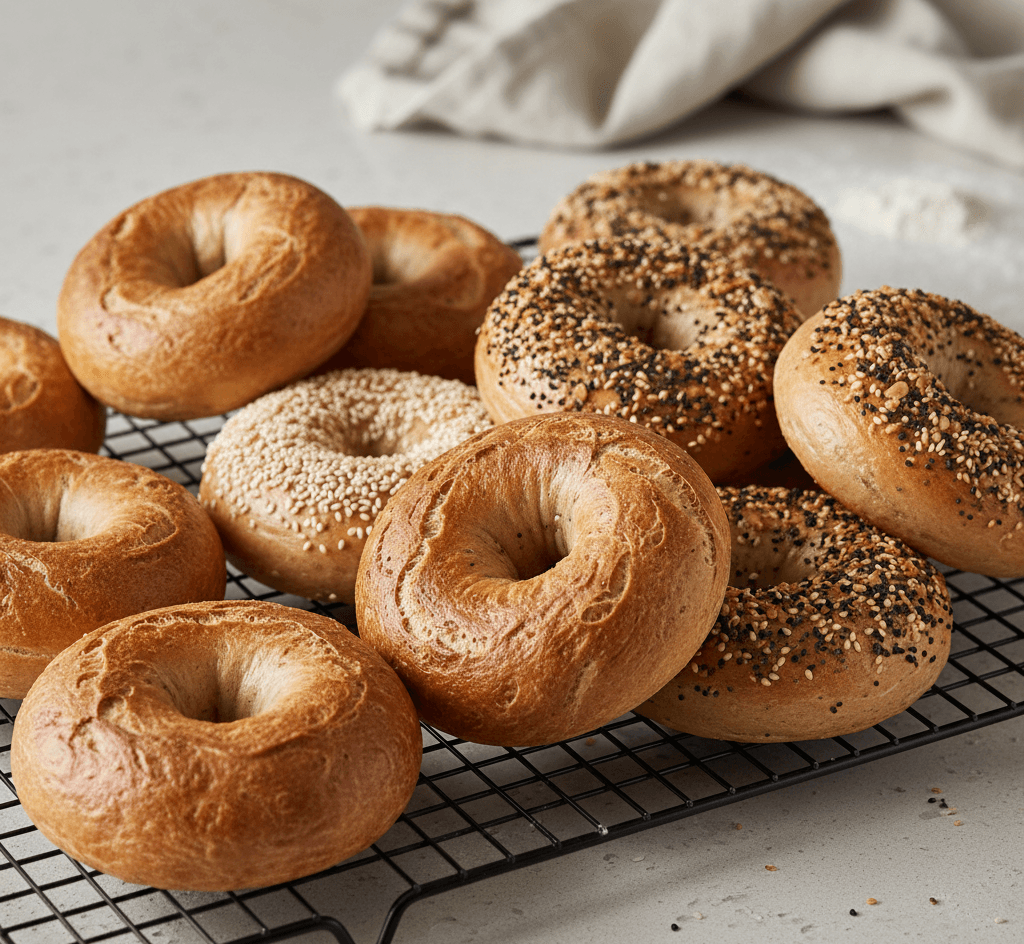
Bagels are yeast-leavened bread shaped into rings, boiled briefly to set their structure, and then baked to create a chewy interior and lightly crisp crust.
Technically, this recipe works because the dough is firm and low-hydration, which limits airiness and creates density. Boiling the shaped dough gelatinizes the starches on the surface, forming a barrier that locks in moisture and gives bagels their signature chew. Baking then finishes the process by setting the interior crumb and browning the exterior.
A common beginner misunderstanding is thinking bagels are just round bread rolls with holes. In reality, the boiling step is what separates bagels from regular bread. Skipping or rushing that step leads to soft rolls rather than true bagels.
Why Make Bagels at Home
Making bagels at home gives you control over texture, flavor, and freshness.
Store-bought bagels are often softened with additives and lack the chew of a real bagel. When you make them yourself, you control the dough strength, boiling time, and baking temperature, which directly affects the final result. Homemade bagels also allow you to customize size, toppings, and flavor without relying on preservatives.
I prefer making bagels at home because they freeze well, cost less per batch, and taste noticeably fresher. Once you understand the process, bagels become a reliable baking project rather than a special-occasion recipe.
Key Ingredients and Why They Matter
The most important ingredient in bagels is bread flour, which provides the protein needed for chew.
Bread flour creates a strong gluten network that gives bagels their dense texture. All-purpose flour can work, but the result will be softer. Water hydrates the flour and activates the yeast, while yeast provides controlled fermentation and structure. Sugar feeds the yeast and lightly sweetens the dough, but its main role is supporting fermentation rather than flavor. Salt strengthens gluten and balances the dough so the bagels don’t taste flat.
For boiling, baking soda or honey changes the surface chemistry of the dough, improving browning and chew. Egg wash and toppings are optional but help with appearance and texture.
Easy Homemade Bagel Recipe
Course: BreadCuisine: AmericanDifficulty: EasyServings
8
servingsPrep time
20
minutesCooking u0026 Baking time
20
minutesCalories
300
kcal Rising Time
1
hour15
minutesTotal time
1
hour55
minutesThese bagels are firm, chewy, and golden with a classic bakery-style texture. The method works because the dough is structured, briefly boiled, and baked at high heat.
Ingredients
- Primary Dough Ingredients
Bread flour – 4 cups (520 grams)
Warm water – 1 ¼ cups (300 ml), about 105–110°F
Active dry yeast – 2 teaspoons (6 grams)
Granulated sugar – 1 tablespoon (12 grams)
Salt – 2 teaspoons (10 grams)
- Boiling Bath
Water – 8 cups
Baking soda – 1 tablespoon
or
Honey – 2 tablespoons- Optional Toppings and Finishing
Egg wash – 1 egg beaten with 1 tablespoon water
Sesame seeds – 2 tablespoons
Everything seasoning – 2 tablespoons
Poppy seeds or coarse salt as needed
Directions
- Mixing and Developing the Dough
The yeast is first dissolved in warm water with sugar and rested until lightly foamy. This confirms the yeast is active. Flour and salt are then mixed in to form a stiff dough. Bagel dough should feel firm rather than soft, which is essential for chew and shape retention.
Kneading develops gluten strength. The dough should become smooth and elastic, resisting gentle pressure without tearing. This step determines the final texture more than any other part of the process. - First Rise and Dough Rest
The dough is rested in a lightly oiled bowl until slightly puffed but not doubled. Bagels rely more on structure than volume, so overproofing weakens the dough. This rest relaxes gluten, making shaping easier. - Shaping the Bagels
The dough is divided into equal portions to ensure even baking. Each piece is rolled into a smooth ball, then shaped into a ring by poking a hole through the center and gently stretching.
Shaping evenly prevents thick centers and thin edges, which can cause uneven cooking. The shaped bagels rest briefly so the dough can relax before boiling. - Boiling the Bagels
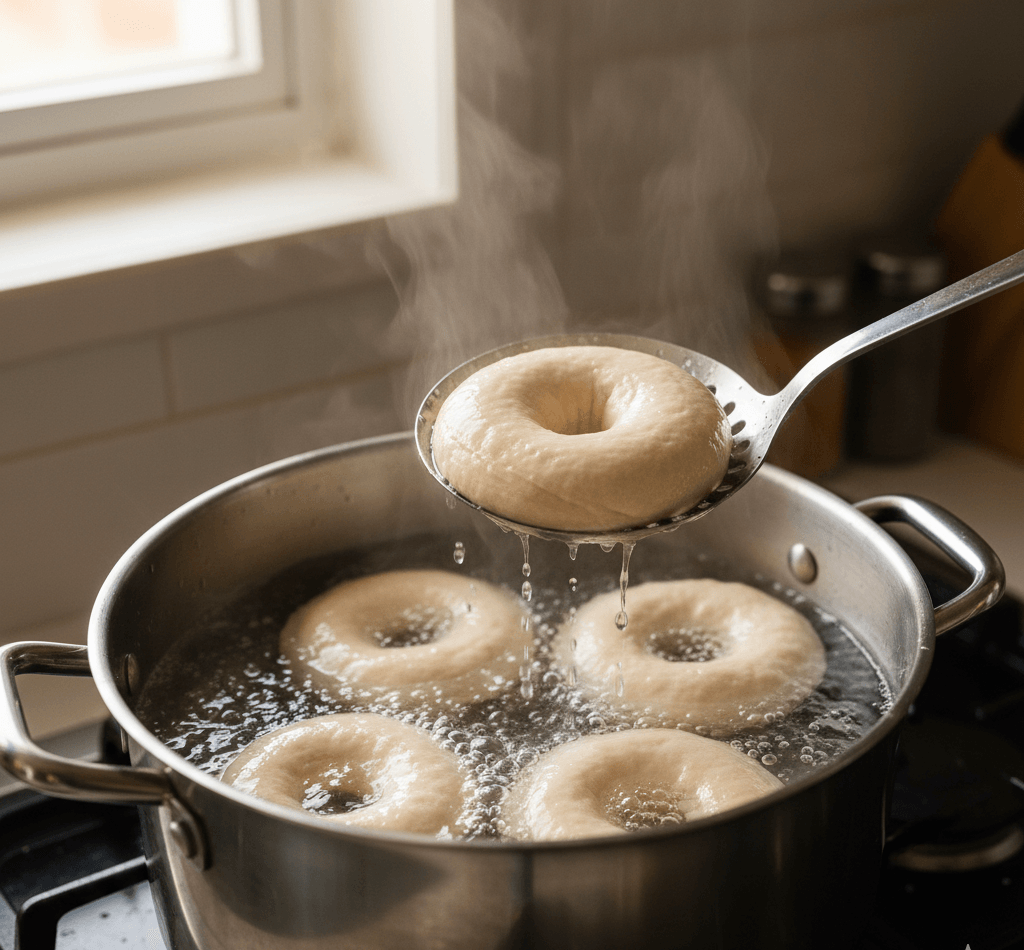
Bagels are boiled in water mixed with baking soda or honey. Boiling sets the outer crust immediately and creates chew. Each bagel is boiled for about 30 seconds per side.
Longer boiling increases chew but can make the crust tough. Shorter boiling produces softer bagels. This step defines the final texture more than baking time. - Baking the Bagels
After boiling, bagels are optionally brushed with egg wash and topped. They are baked in a hot oven until golden brown. High heat encourages proper oven spring while maintaining density.
Cooling briefly before slicing allows the interior crumb to set fully.
Notes
- Most bagel issues come from dough consistency or boiling time. Bagel dough should feel stiff and slightly dry, not soft or sticky. If the dough is too wet, the bagels will puff like rolls instead of staying dense.
- Temperature affects fermentation more than timing. A warmer kitchen speeds rising, while a cooler environment slows it. I always judge readiness by feel rather than the clock.
- For first-time cooks, shaping evenly matters more than perfect circles. Slight imperfections won’t affect flavor, but uneven thickness will affect texture.
- If the bagels brown too quickly, lowering the oven rack helps. If they stay pale, extending bake time by a few minutes solves the issue without drying them out.
How to Know When Bagels Are Ready
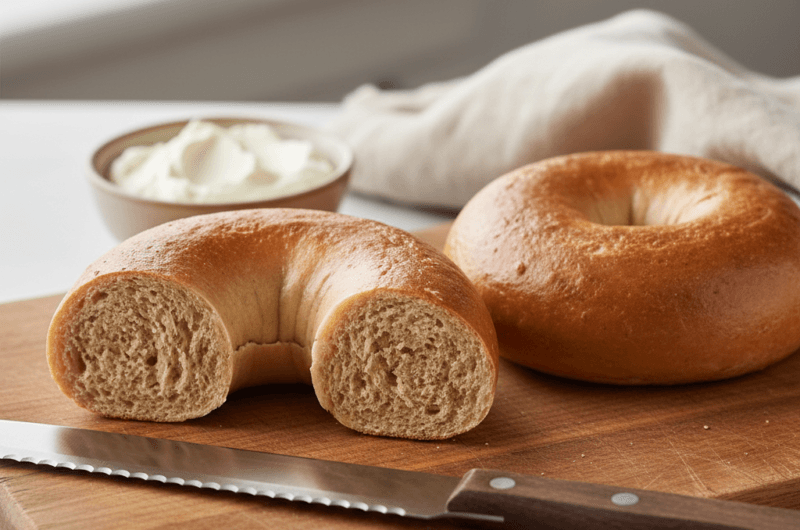
Bagels are ready when they are deeply golden, firm on the outside, and sound hollow when tapped.
The crust should feel set and slightly crisp, while the interior remains dense and chewy. Visually, the surface will look matte rather than glossy once baked through. A properly baked bagel will not feel soft or bread-like when squeezed.
The aroma should be lightly yeasty and toasted. If the bagels smell sweet or doughy, they likely need more baking time.
Common Problems and Fixes
Why are my bagels too soft?
This usually means the dough was too wet or the boiling step was too short. Firmer dough and a full boil help correct this.
Why did my bagels lose their shape?
Overproofing weakens structure. Shortening the first rise prevents collapse.
Why are my bagels pale?
The boiling bath may lack sugar or baking soda, or the oven temperature may be too low. Both affect browning.
Do I need to start over if something goes wrong?
Most issues can be corrected by adjusting boiling time or baking longer rather than discarding the batch.
Storage and Maintenance
Short-Term Storage
Bagels keep best at room temperature for up to two days when stored in a paper bag or loosely covered container. Refrigeration is not recommended, as it dries them out.
Long-Term Storage
Bagels freeze exceptionally well. Once fully cooled, slice them and freeze in an airtight bag for up to three months. Freezing preserves texture better than refrigeration.
Reheating and Revival
Frozen bagels can be toasted directly from the freezer. For whole bagels, warming in the oven restores chew and crust without drying. I avoid microwaving because it softens the crust too much.
How to Use This Bagel Recipe Next
These bagels work well for breakfast sandwiches, cream cheese spreads, or savory fillings. The same dough can be adapted into sesame, onion, or whole wheat bagels with small adjustments. Once you’re comfortable with the process, experimenting with flavored doughs or sourdough-based bagels is a natural next step and supports internal linking across bread and breakfast recipes.