The Best Fluffy Pancakes recipe you will fall in love with. Full of tips and tricks to help you make the best pancakes.


Table of Contents
Cooking fish in an air fryer can feel intimidating because fish cooks quickly and reacts strongly to heat, but when handled correctly, it becomes one of the most reliable and rewarding proteins to make this way. I’ve tested this air fryer fish recipe with different fillets and thicknesses to remove the usual problems people face, such as dry flesh, broken fillets, or coating that turns soggy instead of lightly crisp. The goal here is balance—gentle cooking inside while letting circulating heat do just enough work on the outside.
This method is designed for everyday home cooks who want consistent results without relying on heavy breading or deep frying. Instead of masking the fish, the air fryer enhances its natural texture and flavor. Whether you’re cooking a mild white fish for family meals or meal prepping for the week, this air fryer fish recipe focuses on timing, temperature, and preparation details that make the difference between average and excellent results.
Why Fish Needs a Different Air Fryer Approach
Fish behaves very differently from chicken or beef in an air fryer because of its delicate muscle structure and lower fat content. The flesh cooks fast, and once moisture is lost, it cannot be recovered. This is why many air fryer fish attempts fail—not because the appliance is wrong, but because the method doesn’t respect how fish responds to circulating heat.
Unlike oven baking, air fryers expose fish to intense airflow from all sides. That airflow is great for light browning but unforgiving if the surface is wet or the temperature is too high. The key is starting with dry fillets, using just enough oil to protect the surface, and selecting a temperature that cooks through without tightening the flesh.
Another important factor is thickness consistency. Thin edges cook faster than centers, so choosing evenly cut fillets or adjusting placement in the basket helps prevent overcooked edges. When these details are managed correctly, air fryer fish becomes flaky, moist, and evenly cooked without the greasy finish of pan-frying.
Best Fish Types for Air Fryer Cooking
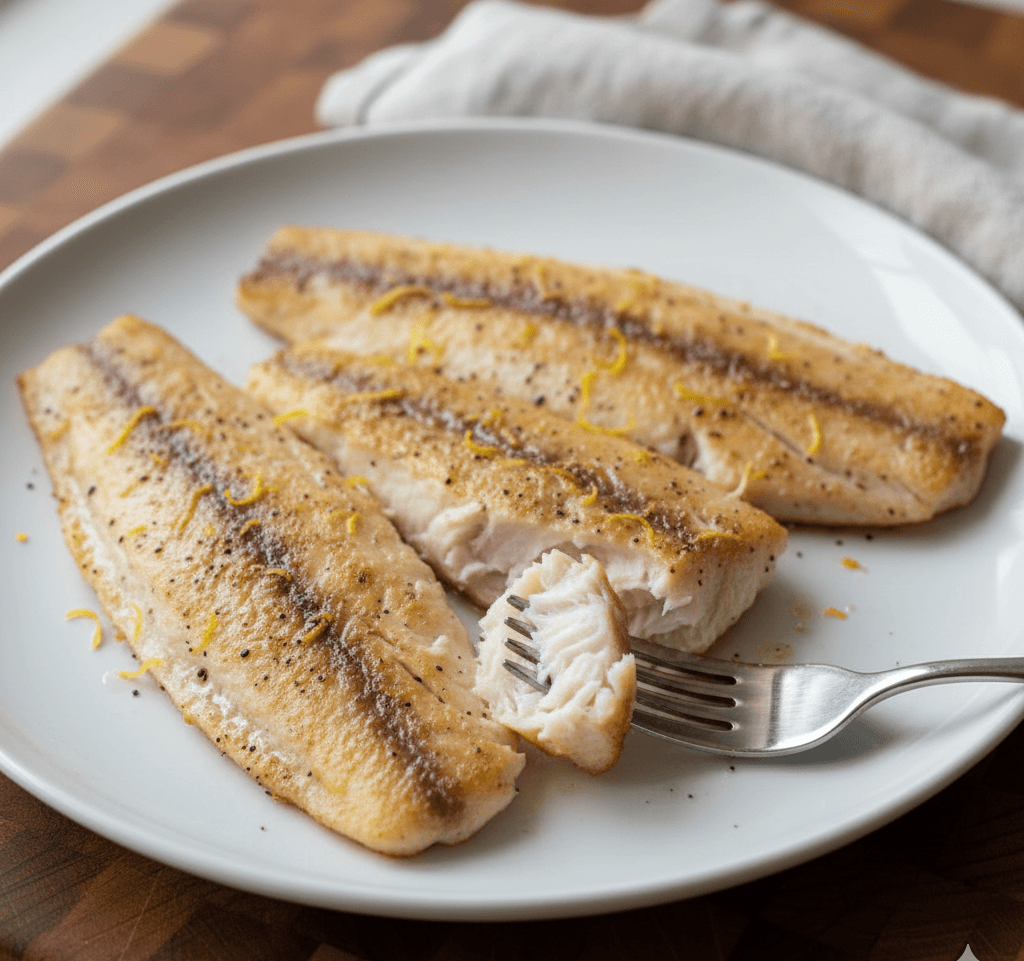
Not all fish performs equally well in an air fryer, and choosing the right type makes the process easier and more forgiving. Firm white fish such as cod, haddock, pollock, and tilapia work especially well because they hold together under airflow and cook evenly without falling apart. These fish also absorb seasoning nicely without becoming overpowering.
Medium-firm options like salmon or trout can also be used, but they require slightly lower temperatures and closer attention due to their higher fat content. Very delicate fish, such as sole or flounder, are more prone to breaking and benefit from careful handling or parchment liners.
Fresh fish is ideal, but frozen fillets can be used if fully thawed and dried thoroughly. Excess moisture from freezing is one of the biggest causes of soggy air fryer fish, so taking time to pat fillets dry directly impacts texture. Choosing fillets of similar thickness ensures even cooking and reduces the need for guesswork during the process.
Ingredients That Protect Texture and Flavor
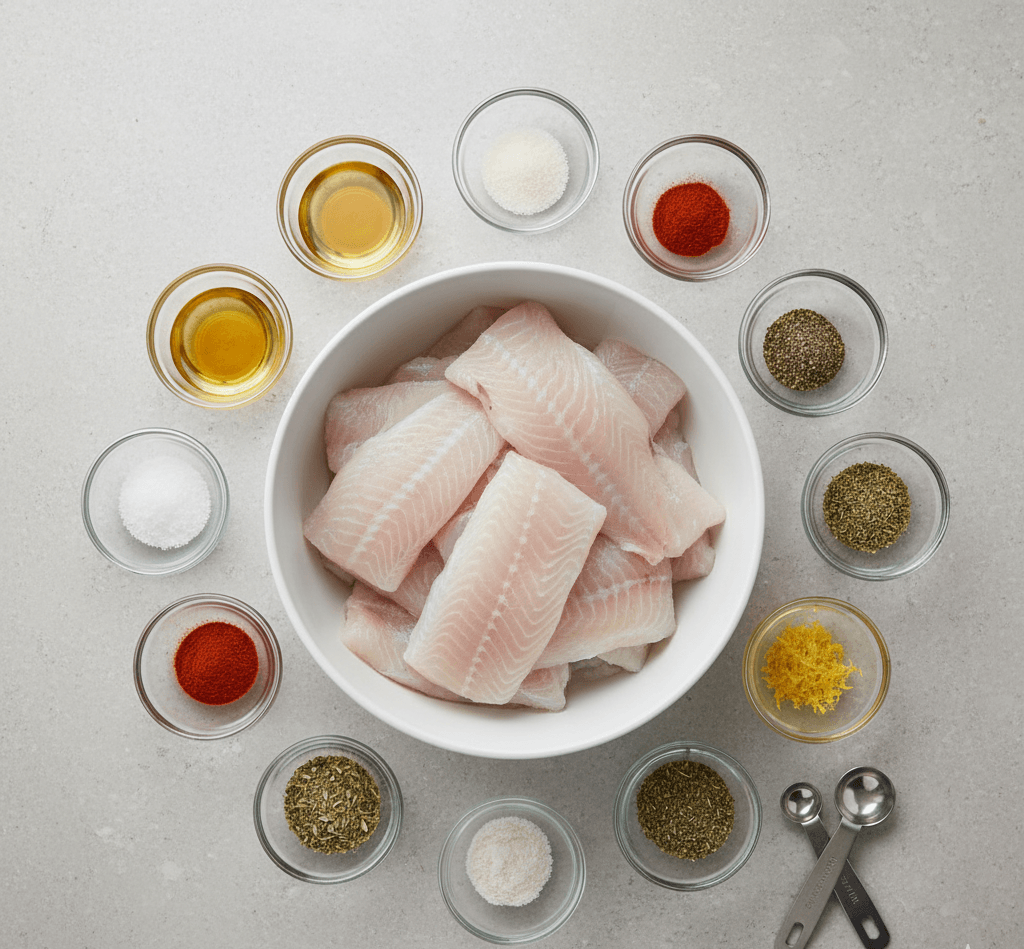
This air fryer fish recipe uses minimal ingredients because the goal is to support the fish rather than cover it up. Each ingredient plays a specific role in moisture retention, surface protection, and flavor balance.
Primary Ingredients
White fish fillets (cod, haddock, or tilapia) – 680 g
Choose evenly sized fillets, about 2–3 cm thick, for consistent cooking.
Neutral oil – 1½ tablespoons
A light oil such as avocado or sunflower oil helps prevent sticking and supports gentle browning.
Salt – 1¼ teaspoons
Enhances natural flavor and helps regulate surface moisture.
Black pepper – ¾ teaspoon
Adds mild warmth without overpowering the fish.
Lemon zest – 1 teaspoon
Brightens flavor without adding liquid that could soften the surface.
Optional Helpful Add-Ins
Garlic powder – ½ teaspoon
Adds savory depth without burning under air fryer heat.
Paprika – ½ teaspoon
Provides light color and subtle warmth.
Dried parsley or dill – ½ teaspoon
Complements fish flavor without dominating it.
Air Fryer Fish Recipe for Flaky, Moist Results Every Time
Course: MainCuisine: InternationalDifficulty: EasyServings
4
servingsPrep time
10
minutesCooking time
15
minutesTotal time
25
minutesThis air fryer fish recipe produces flaky, moist fillets with clean flavor and no mess. It’s reliable, quick, and ideal for weeknight meals or light lunches.
Ingredients
White fish fillets – 680 g
Neutral oil – 1½ tablespoons
Salt – 1¼ teaspoons
Black pepper – ¾ teaspoon
Lemon zest – 1 teaspoon
- Optional / Helpful Add-Ins
Garlic powder – ½ teaspoon
Paprika – ½ teaspoon
Dried parsley or dill – ½ teaspoon
Directions
- Dry and Season the Fish Properly
Start by patting the fish fillets completely dry using paper towels. This step is essential, as surface moisture leads to steaming instead of light browning in an air fryer. Take time to dry both sides and edges, especially if the fish was previously frozen.
Place the fillets in a shallow dish and brush lightly with oil. Sprinkle salt, pepper, and lemon zest evenly, followed by any optional seasonings. The goal is a thin, even coating rather than a thick layer. Over-seasoning can mask the fish’s natural flavor and interfere with texture. - Preheat and Prepare for Gentle Airflow
Preheat the air fryer to 190°C (375°F) for about three minutes. Lightly grease the basket or use a perforated parchment liner if your air fryer allows it. Arrange the fillets in a single layer with space between each piece so air can circulate freely.
Avoid stacking or overlapping, as this traps steam and causes uneven cooking. If needed, cook in batches rather than crowding the basket. - Cook Until Flaky but Still Moist
Cook the fish for 6 minutes without disturbing it. This initial phase allows the flesh to set gently without breaking. After 6 minutes, carefully flip the fillets using a thin spatula to support their structure.
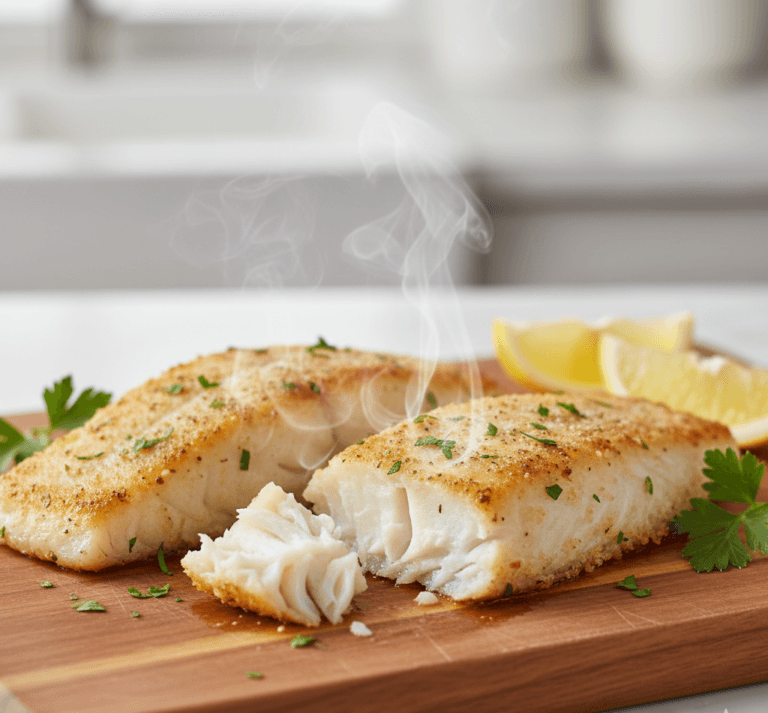
Continue cooking for another 4–6 minutes, depending on thickness. The fish is done when it flakes easily with a fork and turns opaque throughout. An internal temperature of 63°C (145°F) indicates doneness without dryness. - Rest Briefly Before Serving
Remove the fish and let it rest for one minute. This short rest allows steam to escape gradually and prevents moisture loss when served immediately. Skipping this step can cause the fish to release juices too quickly, affecting texture.
Notes
- Most air fryer fish problems come from excess moisture or overly high temperatures. Drying the fillets thoroughly before cooking solves many texture issues immediately.
- Temperature control matters more than total cook time. Fish continues cooking slightly after removal, so pulling it just as it turns opaque prevents dryness.
- Smell is a helpful indicator. When the fish is nearly done, it releases a clean, lightly roasted aroma rather than a raw or watery scent.
- First-time cooks often add lemon juice before cooking, which introduces too much liquid. Zest provides flavor without affecting texture, while juice is best added after cooking.
- If the fish browns too quickly, your air fryer may run hot. Lower the temperature slightly and extend cooking time to maintain moisture.
How to Serve and Use Air Fryer Fish
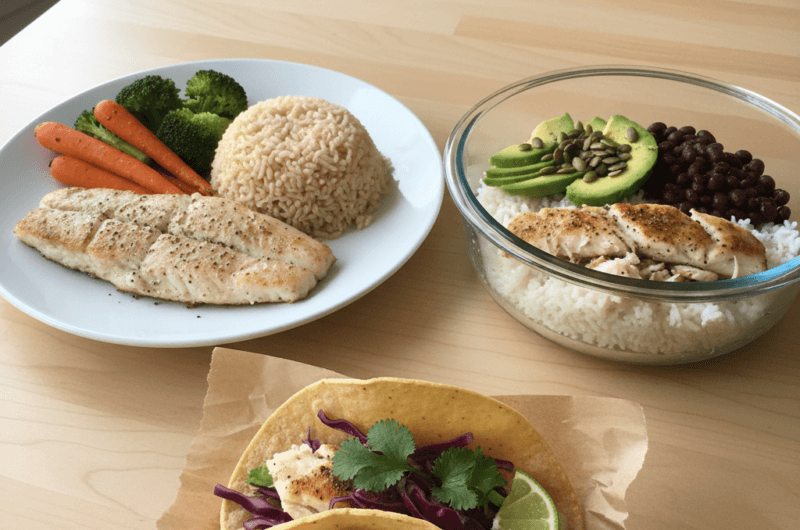
This air fryer fish recipe works well as a light main dish served with vegetables, grains, or salads. The clean flavor pairs naturally with simple sides rather than heavy sauces.
Leftovers can be flaked and used in wraps, rice bowls, or fish tacos the next day. Reheating gently in the air fryer helps restore texture without drying the fish.
For variation, the same method works with mild spice blends or herb coatings, as long as they don’t contain added sugar. If you enjoy this style of cooking, you may also like air fryer hamburger recipes for quick protein meals or air fryer chicken drumsticks for a heartier option. For sides, air fryer potato wedges complement fish well and use similar temperature logic.
FAQ
Can I use frozen fish in the air fryer?
Yes, but thaw completely and dry thoroughly before cooking to avoid excess moisture and uneven texture.
Why does my air fryer fish turn dry?
Dry fish usually results from high temperatures or overcooking. Use moderate heat and rely on doneness cues instead of time alone.
Do I need to flip fish in the air fryer?
Flipping once helps even cooking and prevents one side from overexposing to airflow.
Can I bread fish using this method?
Yes, but light coatings work best. Heavy breading may brown before the fish cooks through.