The Best Fluffy Pancakes recipe you will fall in love with. Full of tips and tricks to help you make the best pancakes.


Table of Contents
This quick hummus recipe without tahini is designed for speed, reliability, and everyday cooking realities. Tahini is traditional, but it isn’t essential for good hummus, especially when the goal is a fast, smooth spread made from pantry staples. By leaning on olive oil, garlic, lemon juice, and proper blending technique, this version delivers the same creamy texture and balanced flavor people expect from classic hummus—without the extra ingredient or cost.
I started making hummus this way when tahini wasn’t always available where I lived, and over time it became my default. The key is understanding what tahini actually contributes—fat, body, and mild bitterness—and replacing those qualities intentionally rather than skipping them altogether. When done correctly, the result is a clean, chickpea-forward hummus that feels lighter, brighter, and easier to customize.
This version is especially practical for quick meals, last-minute snacks, wraps, or bowls, because it comes together in minutes and doesn’t rely on specialty ingredients. It’s dependable, flexible, and forgiving, which is exactly what a quick recipe should be.
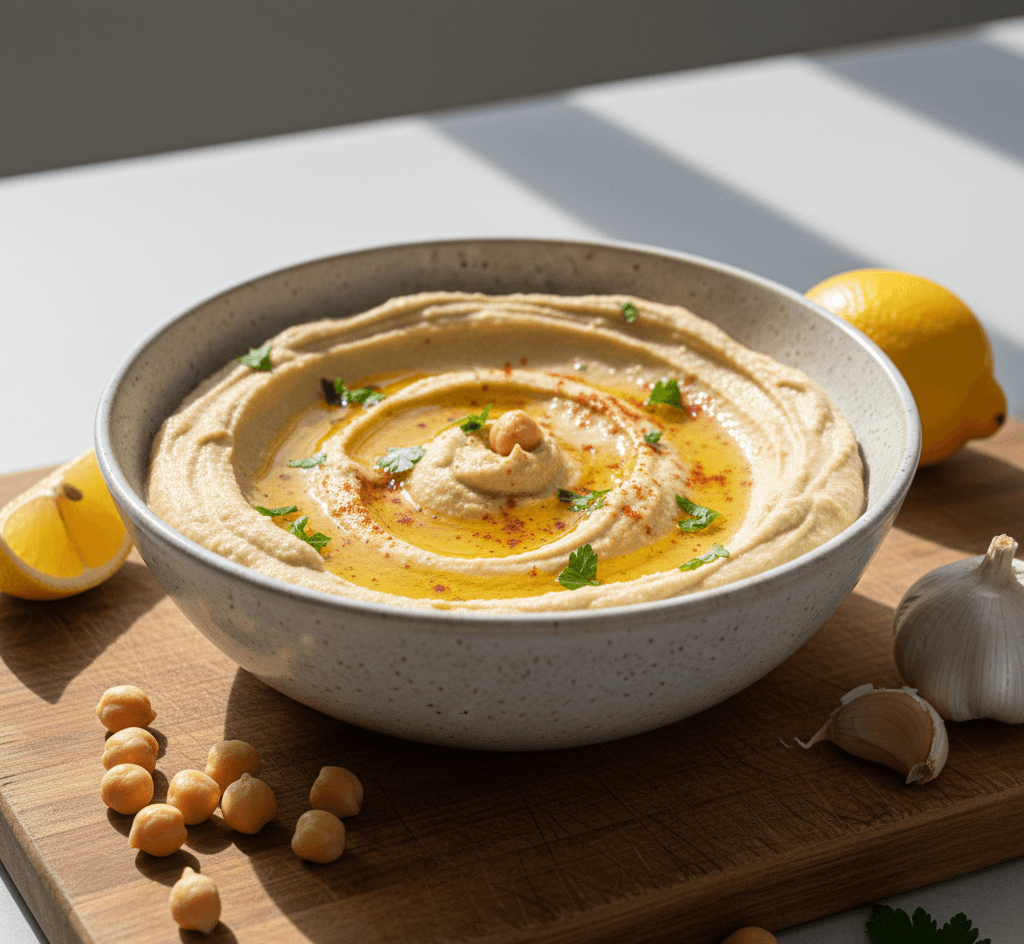
What Replaces Tahini in This Recipe
Tahini adds richness and emulsification, but it’s not the only way to achieve those qualities. In this quick hummus recipe without tahini, extra-virgin olive oil plays the primary role in building body and smoothness. When blended properly, olive oil coats the chickpeas and creates a creamy mouthfeel without heaviness.
Lemon juice steps in to provide the sharpness that tahini normally balances. Fresh lemon is important here, because bottled juice tends to flatten the flavor. Garlic adds depth, but it must be handled carefully so it enhances rather than overpowers the hummus. Salt pulls everything together and brings out the natural nuttiness of the chickpeas.
Water, often overlooked, is a quiet but essential component. Adding a small amount during blending allows the hummus to emulsify smoothly instead of turning thick or grainy. This combination mimics tahini’s functional role rather than its exact flavor, which is why the hummus still feels complete.
Ingredients That Keep It Fast and Reliable
Speed matters in quick meals, and this recipe relies on ingredients that are easy to find and easy to work with. Canned chickpeas are the foundation, and using them correctly makes all the difference. Rinsing removes excess starch and any canned flavor, while briefly warming them helps them blend more smoothly.
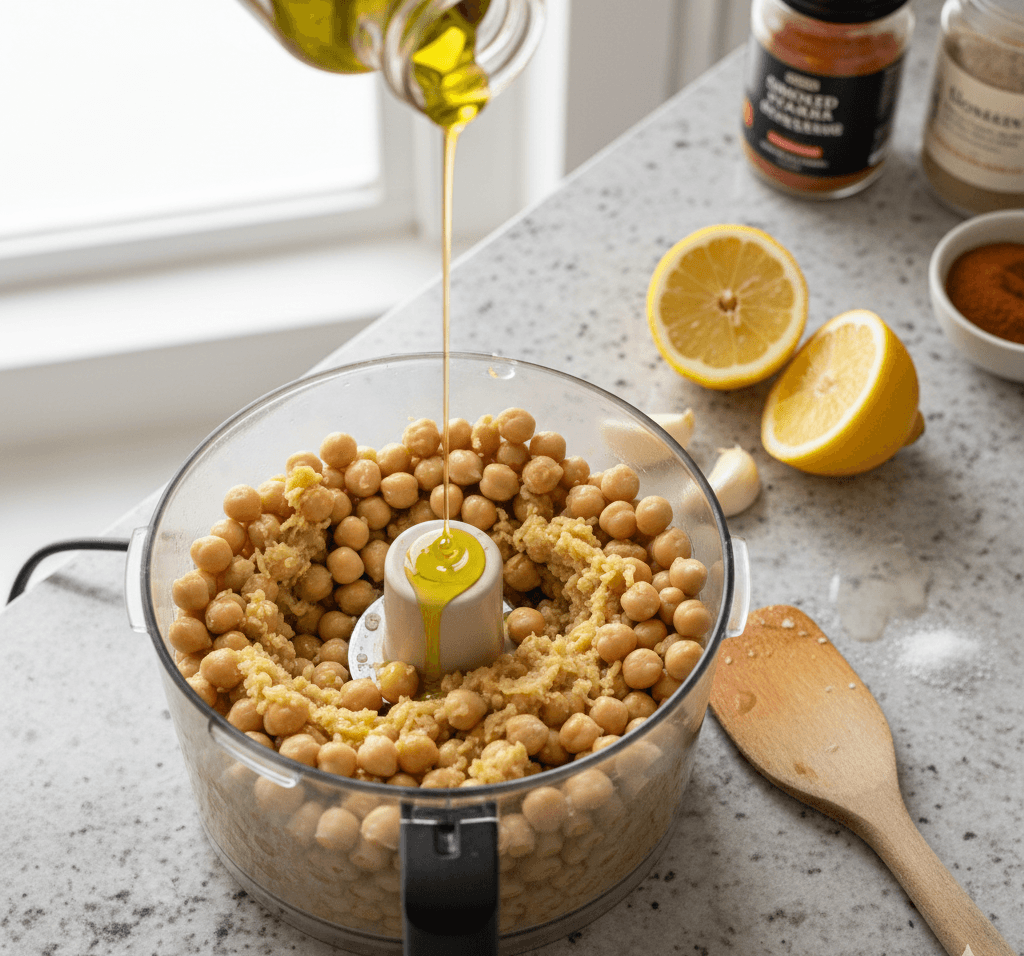
Olive oil should be fresh and not overly bitter. A balanced, everyday olive oil works better here than a very peppery one. Garlic can be raw for bite or briefly mellowed if you prefer a softer flavor. Lemon juice should always be added gradually so the acidity doesn’t overwhelm the chickpeas.
Everything in this recipe is adjustable, which is part of what makes it reliable. You don’t need precision or specialty tools—just a food processor or blender and a willingness to taste as you go.
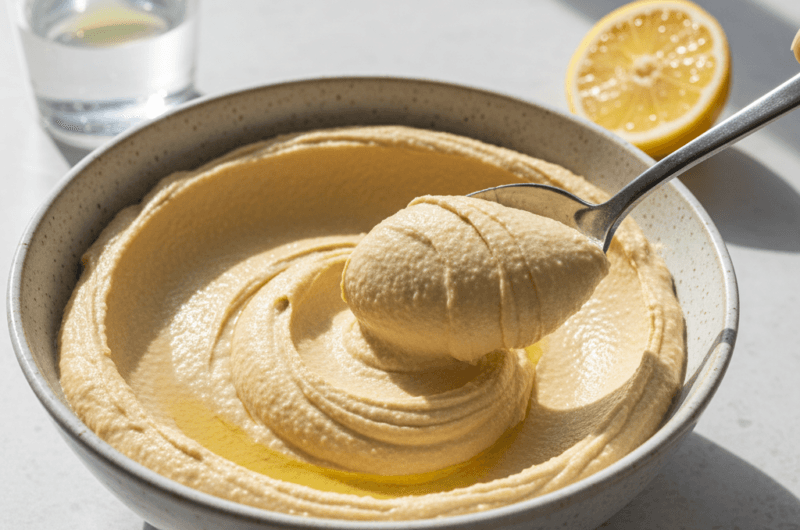
Quick Hummus Without Tahini (Smooth, Creamy, 10 Minutes)
Course: AppetizersCuisine: Middle EasternDifficulty: EasyServings
4
servingsPrep time
10
minutesCooking timeminutes
Total time
10
minutesThis quick hummus without tahini is a smooth, creamy chickpea dip made with olive oil, garlic, and lemon. It’s fast, flexible, and perfect when you want homemade hummus without extra ingredients.
Ingredients
Cooked chickpeas (canned), 1½ cups
Extra-virgin olive oil, ¼ cup
Fresh lemon juice, 2–3 tablespoons
Garlic, 1 small clove
Salt, ¾ teaspoon
Cold water, 3–5 tablespoons
- Optional Helpful Add-Ins
Ground cumin, ½ teaspoon
Smoked paprika, ¼ teaspoon
Plain yogurt, 1–2 tablespoons
Directions
- Start by prepping the chickpeas
Rinse the chickpeas thoroughly under running water to remove excess starch and any canned flavor. If you have an extra minute, warming them slightly—either by running hot water over them or microwaving briefly—helps them break down more easily during blending. This small step noticeably improves smoothness. - Build the flavor base first
Add the garlic, lemon juice, salt, and olive oil to the food processor and blend briefly before adding the chickpeas. This allows the garlic to disperse evenly and prevents raw chunks from remaining in the final hummus. It also helps the oil and acid begin emulsifying before the chickpeas are introduced. - Blend the chickpeas gradually
Add the chickpeas and blend until thick and uniform. At this stage, the mixture may look heavy or stiff, which is expected. Scrape down the sides so everything blends evenly, then continue processing until the texture looks cohesive. - Adjust with water for creaminess
With the processor running, add cold water one tablespoon at a time. This step transforms the hummus from dense to silky. The water loosens the mixture and helps it whip slightly, giving the hummus a lighter, smoother texture without thinning the flavor. - Finish with optional additions
If using cumin, paprika, or yogurt, add them at the end and blend briefly. Taste and adjust salt or lemon as needed. The hummus should taste balanced, not sharp, with a soft chickpea finish.
Notes
- Observe the texture while blending rather than relying on exact measurements, because chickpeas vary in moisture.
- Add water slowly and let the processor run long enough for the hummus to visibly smooth out. Taste after resting for a minute, since flavors settle quickly once blending stops.
- Use a mild olive oil if you’re new to tahini-free hummus to avoid bitterness. Start with less garlic and add more only after blending, especially if using a strong clove.
Texture, Thickness, and Flavor Balance
One of the most common concerns with tahini-free hummus is texture. Without tahini, hummus can feel flat or grainy if the balance isn’t right. The solution isn’t more oil, but better hydration and blending time.
If the hummus feels pasty, it usually needs more water rather than more fat. If it tastes dull, it likely needs salt before more lemon. Lemon should brighten, not dominate, and garlic should support rather than linger aggressively. Letting the hummus rest for a few minutes after blending allows flavors to settle and soften.
This quick hummus recipe without tahini is meant to be adaptable. Some days you may want it thicker for spreading, and other days looser for dipping. Small adjustments make a big difference, and the recipe is forgiving enough to handle them.
Common Problems and How to Fix Them
Many first-time hummus makers assume something went wrong when the texture or flavor feels off, but most issues have simple solutions.
If the hummus is grainy, it usually means the chickpeas weren’t blended long enough or didn’t have enough liquid. Extra blending time almost always helps. If it tastes bitter, the olive oil may be too strong, or the garlic too large. Balancing with a bit more chickpea or a spoon of yogurt can soften that edge.
A bland hummus almost always needs salt before anything else. Salt unlocks the flavor of the chickpeas and makes the lemon and garlic noticeable. Adding more lemon without salt rarely fixes dullness and can throw the balance off.
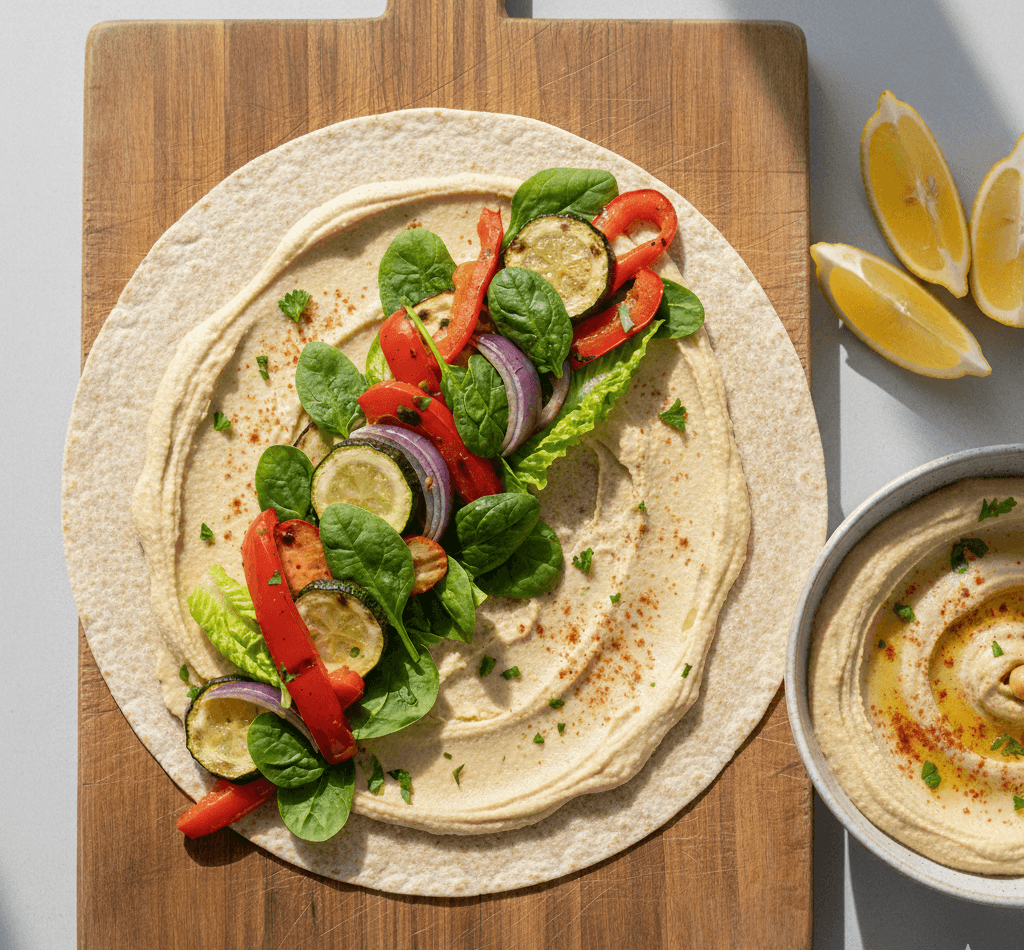
How to Use This Hummus in Quick Meals
This hummus works well beyond dipping. Spread it into wraps with grilled vegetables, spoon it onto grain bowls, or thin it slightly with water for a quick salad dressing. It also pairs well with roasted vegetables, falafel alternatives, or as a sandwich spread when you want something creamy without heaviness.
If you enjoy simple chickpea-based spreads, you may also like a classic garlic yogurt dip, a roasted red pepper hummus variation, or a lemony white bean spread, all of which build on similar techniques and flavors.
Storage and Make-Ahead Notes
This hummus keeps well in the refrigerator for up to four days when stored in an airtight container. A thin layer of olive oil on top helps prevent drying. The texture may thicken slightly as it chills, but a quick stir or splash of water restores its creaminess.
Because it’s made without tahini, the flavors stay clean and fresh rather than deepening aggressively over time. This makes it especially suitable for meal prep when you want something that stays mild and versatile.
Frequently Asked Questions
Can I make hummus without tahini taste authentic?
Yes. While tahini is traditional, proper balance of olive oil, lemon, salt, and blending technique creates a hummus that feels complete and satisfying.
What can I use instead of olive oil?
A neutral oil like avocado oil works, but the flavor will be milder. Olive oil provides the best balance of richness and taste.
Why is my hummus not smooth?
It usually needs more blending time or a small amount of water. Texture improves more from hydration than from extra oil.
Is this hummus suitable for wraps and sandwiches?
Absolutely. This quick hummus recipe without tahini spreads easily and doesn’t overpower other ingredients.