The Best Fluffy Pancakes recipe you will fall in love with. Full of tips and tricks to help you make the best pancakes.


Table of Contents
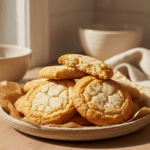
These quick crispy and chewy chipless cookies are proof that great cookies don’t need chocolate chips to be satisfying. What makes this recipe work is balance—crisp edges that snap lightly when you bite in, a soft and chewy center that stays tender even after cooling, and a rich vanilla-butter flavor that doesn’t rely on mix-ins to carry the cookie. I turn to this recipe when I want something fast, dependable, and comforting without pulling out extra ingredients.
Because there are no chocolate chips or chunks, the dough comes together faster and bakes more evenly. The sugar blend does most of the heavy lifting here, creating that classic crisp-chewy contrast while letting the butter and vanilla shine. These cookies are also a great base recipe. Once you understand why each element works, you can adapt it confidently without guessing or overcomplicating things.
This is the kind of recipe I make when I want cookies now, not later. The dough doesn’t need chilling, the ingredient list stays short, and the results are consistent even for first-time bakers.
What makes a cookie crispy on the outside but chewy inside
The texture of these quick crispy and chewy chipless cookies comes down to a few deliberate choices. Brown sugar adds moisture and chew because of its molasses content, while white sugar encourages spreading and crisp edges. Using melted butter rather than softened butter helps the dough spread just enough in the oven, creating thin, crisp edges without drying out the center.
Eggs play a structural role here. A single egg provides enough binding and moisture without turning the cookies cakey. Over-flouring is the fastest way to lose chewiness, which is why measuring carefully matters more in a simple recipe like this. With fewer ingredients, each one has a clearer impact on the final texture.
Baking temperature also matters. A moderately hot oven allows the edges to set quickly while the centers stay slightly underbaked. Pulling the cookies at the right moment is what locks in that chewy middle that finishes setting as they cool.
Ingredients that build flavor without chocolate chips
When there’s nothing hiding inside the cookie, every ingredient has to earn its place. That’s what makes this recipe reliable and easy to understand.
The butter provides richness and spreads flavor throughout the dough. Melting it deepens the buttery taste and simplifies mixing. Brown sugar contributes chewiness and a subtle caramel note, while white sugar sharpens the sweetness and improves crispness. Vanilla extract becomes more noticeable here than in chip-filled cookies, so using a good-quality vanilla makes a difference.
Flour gives the cookies structure, but only just enough. Too much flour would mute the buttery flavor and stiffen the crumb. Baking soda helps the cookies spread and brown properly, while salt balances sweetness and keeps the cookies from tasting flat.
This simple ingredient list is also why these cookies adapt so well. Once you understand the role of each component, substitutions become easier and more predictable.
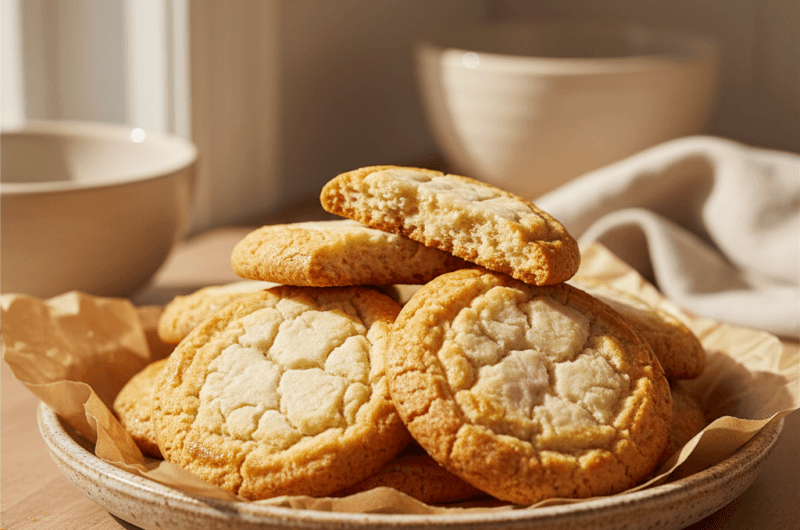
Quick Crispy and Chewy Chipless Cookies
Course: DessertCuisine: InternationalDifficulty: EasyServings
12
cookiesPrep time
12
minutesCooking time
15
minutesTotal time
27
minutesThese quick crispy and chewy chipless cookies deliver golden edges and soft centers without any add-ins. They’re fast, simple, and perfect when you want homemade cookies without extra steps.
Ingredients
Unsalted butter – ½ cup, melted and slightly cooled
Brown sugar – ½ cup, packed
White sugar – ¼ cup
Egg – 1 large, room temperature
Vanilla extract – 1½ teaspoons
All-purpose flour – 1¼ cups
Baking soda – ½ teaspoon
Salt – ¼ teaspoon
- Optional Helpful Add-Ins
Extra vanilla extract – ½ teaspoon for deeper flavor
A pinch of cinnamon – for subtle warmth
Directions
- This dough comes together in one bowl, which keeps the process fast and controlled. I start by whisking the melted butter with both sugars until the mixture looks glossy and smooth. This step ensures the sugars dissolve evenly, which helps with both texture and flavor.
- The egg and vanilla go in next. Mixing them in thoroughly at this stage allows the dough to emulsify properly, giving the cookies a uniform crumb. Once the wet ingredients are smooth, I gently fold in the dry ingredients. I stop mixing as soon as the flour disappears. Overmixing would activate too much gluten, leading to firmer, less chewy cookies.
- The dough should look soft but not sticky. If it feels overly loose, it usually means the butter was too hot when added. Letting the dough rest for a minute or two helps it settle without requiring extra flour.
Notes
- If your cookies spread too much, the butter was likely too warm or the baking sheet was hot. Allowing both to cool slightly before baking makes a noticeable difference in shape and texture.
- Chewiness depends more on sugar balance than baking time. Reducing brown sugar or increasing flour will quickly shift the cookies toward a drier texture.
- Oven temperature accuracy matters more in simple recipes. An oven that runs hot will crisp the cookies too fast, while a cooler oven may prevent proper spreading.
- Watch the edges, not the clock. Visual cues are more reliable than timing alone when baking cookies. These cookies firm up as they cool, so judging doneness while they’re hot can be misleading.
Baking for crisp edges and soft centers every time
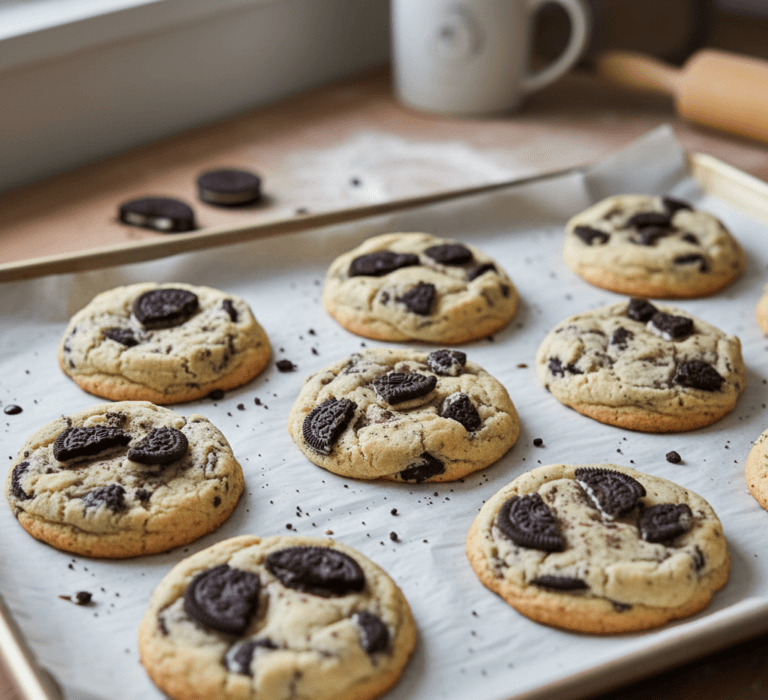
The oven does most of the work in creating the signature texture of these quick crispy and chewy chipless cookies. I bake them on a lined baking sheet with enough space between each scoop to allow spreading. Flattening the dough slightly helps the cookies spread evenly without becoming thin or brittle.
During baking, the edges should turn lightly golden while the centers still look pale and soft. This contrast is intentional. Pulling the cookies at this stage ensures the centers stay chewy as they cool. Leaving them in the oven until fully golden all the way through would result in a crisp cookie without that soft middle.
Cooling is part of the process. Letting the cookies rest on the baking sheet for a few minutes allows them to firm up just enough to move without breaking, while still finishing their internal set.
Ways to adapt these cookies without losing texture
These cookies are a strong base recipe, which makes small adjustments easy to manage. If you want a deeper flavor, increasing the vanilla slightly enhances richness without affecting structure. Adding a pinch of cinnamon introduces warmth without overpowering the buttery profile.
For a slightly softer center, reducing the baking time by one minute keeps the interior extra tender. For crisper edges, extending baking time by thirty seconds achieves more snap without drying the middle.
If you enjoy this style, you may also like SavoryTribe’s classic sugar cookies or our small-batch butter cookies, both of which build on similar principles with different flavor directions.
Storage and freshness tips for chipless cookies
These cookies store well because there are no chocolate chips to harden or bloom. Once fully cooled, keep them in an airtight container at room temperature. They stay crisp at the edges and chewy in the center for up to three days.
If you prefer softer cookies, adding a small piece of bread to the container helps maintain moisture. For longer storage, the baked cookies freeze well and thaw quickly without losing texture.
The dough can also be portioned and frozen, making it easy to bake fresh cookies whenever the craving hits.
Use these cookies beyond snacking
These quick crispy and chewy chipless cookies work well as a dessert base. They’re excellent for ice cream sandwiches because the chewy center stays flexible even when frozen. Crumbled cookies also make a flavorful topping for yogurt or parfaits.
If you enjoy simple, adaptable desserts, pairing this recipe with SavoryTribe’s no-fuss vanilla ice cream or easy caramel sauce creates an effortless dessert spread without extra baking.
Frequently asked questions
Can I make these cookies without brown sugar?
You can, but the cookies will be crisper and less chewy. Brown sugar is essential for the soft center.
Why did my cookies turn out cakey?
Too much flour or overmixing usually causes a cakey texture. Measure flour carefully and mix just until combined.
Can I double this recipe?
Yes, the recipe scales well. Just make sure to bake in batches so the oven temperature stays consistent.
Do these cookies need chilling?
No chilling is required. That’s what makes this recipe quick and reliable.