The Best Fluffy Pancakes recipe you will fall in love with. Full of tips and tricks to help you make the best pancakes.


Cottage cheese is one of those ingredients I always keep in my fridge because it’s affordable, filling, and incredibly flexible. On busy weekdays or low-budget weeks, it becomes my go-to protein when meat feels expensive or unnecessary. This everyday cottage cheese skillet is the kind of recipe I cook without thinking too much—simple ingredients, one pan, and a result that feels comforting without being heavy.
What I love most about this dish is that it doesn’t try to be fancy. It’s built around pantry spices, basic vegetables, and cottage cheese doing the heavy lifting. You can eat it on its own, scoop it into wraps, or stretch it across multiple meals. It’s the kind of practical, no-waste recipe that fits naturally into everyday cooking, especially when you’re trying to eat well on a budget.
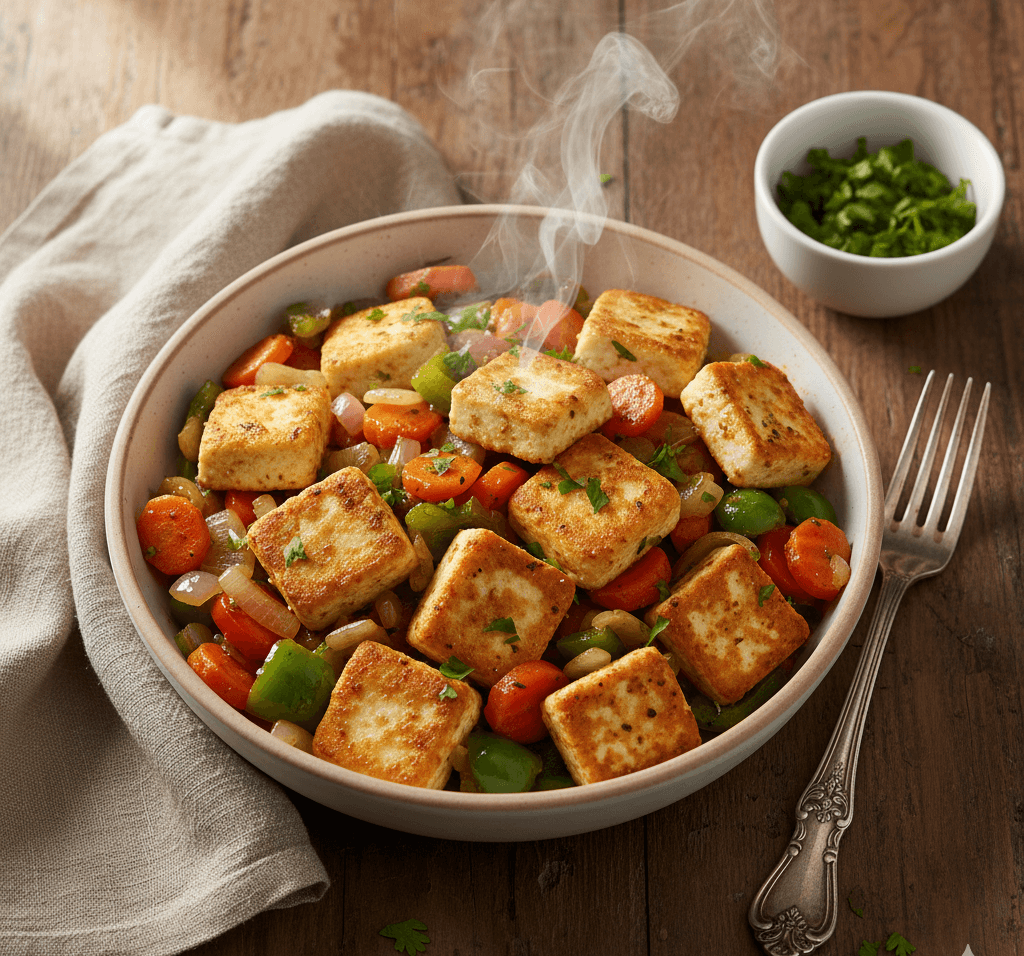
Why This Is a True Budget & Everyday Recipe
When I call a recipe “budget-friendly,” I don’t just mean cheap ingredients—I mean ingredients that are easy to find, flexible to replace, and useful across multiple meals. Cottage cheese checks all those boxes. It’s usually cheaper than paneer or meat, has a long fridge life, and works in both savory and sweet dishes, which makes it incredibly economical over time.
This recipe also keeps vegetable choices simple and adaptable. I often use onions, carrots, and capsicum because they’re affordable and available year-round, but the recipe doesn’t break if you swap in cabbage, peas, or even leftover cooked vegetables. That flexibility matters when you’re cooking daily and trying to reduce food waste. Another budget advantage is that this dish uses basic spices you likely already own, so there’s no need to buy specialty seasonings just for one recipe.
Most importantly, this is a recipe you can stretch. One pan can turn into multiple meals—served fresh, reheated the next day, or repurposed into sandwiches or wraps. That ability to reuse and adapt is what truly makes a recipe everyday-worthy, not just inexpensive on paper.
Ingredients & Cost-Saving Substitutions
The ingredients in this recipe are intentionally simple, but each one plays a role in flavor, texture, and satiety. Cottage cheese forms the base, providing protein and creaminess without the cost of meat. I prefer full-fat cottage cheese for better texture, but low-fat works just fine if that’s what you have. If your cottage cheese is very watery, draining it slightly helps prevent a soggy final dish.
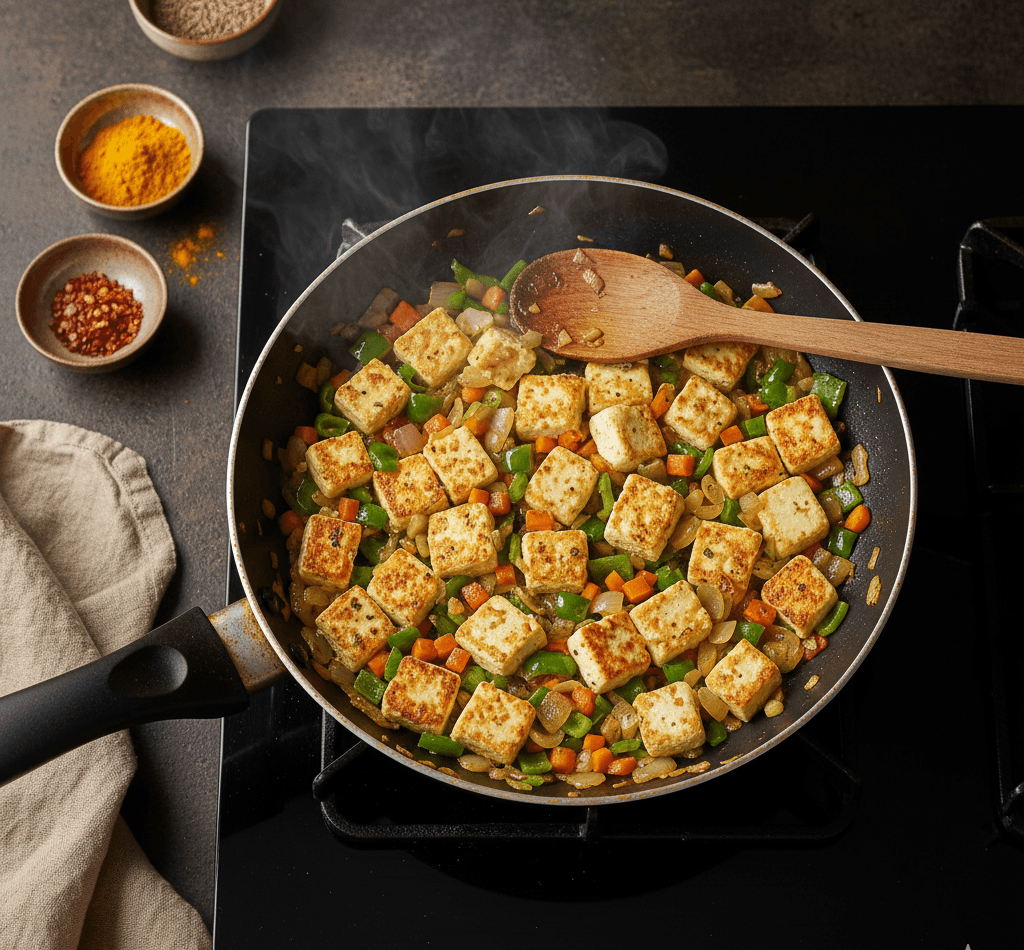
Onions are non-negotiable for me because they build flavor cheaply and effectively. Carrots add mild sweetness and bulk, which helps stretch the dish further, while capsicum adds freshness and color. If capsicum is expensive or unavailable, cabbage or green beans work equally well and are often cheaper. Tomatoes or tomato puree add moisture and balance, but even a spoon of leftover cooked tomato gravy can be used instead.
Spices are kept basic: salt, black pepper, turmeric, and chili powder. These are everyday spices that add warmth without overpowering the cottage cheese. A small amount of oil is enough, making the recipe economical and lighter. If you want to boost flavor without extra cost, a pinch of cumin seeds or dried herbs can be added, but the recipe is designed to work even without them.
Everyday Cottage Cheese Skillet (Budget-Friendly & High-Protein)
Course: MainCuisine: InternationalDifficulty: EasyServings
3
servingsPrep time
10
minutesCooking time
15
minutesTotal time
25
minutesThis everyday cottage cheese skillet is a simple, budget-friendly dish made with basic vegetables and pantry spices. It’s filling, flexible, and perfect for quick lunches or dinners without spending extra.
Ingredients
1½ cups cottage cheese (drained if watery)
1 medium onion, finely chopped
1 small carrot, grated or finely chopped
½ cup capsicum, finely chopped
1 medium tomato, finely chopped or ¼ cup tomato puree
1½ tablespoons oil
Salt according to taste
- Optional / Helpful Add-Ins
¼ teaspoon turmeric
½ teaspoon chili powder or black pepper
Pinch of cumin seeds
Leftover cooked vegetables (peas, beans, cabbage)
Directions
- Start with the Flavor Base
Heat oil in a wide pan over medium heat and add onions first. Cooking the onions slowly until soft and lightly golden builds a savory base without needing extra spices. This step matters because onions provide sweetness and depth, which prevents the final dish from tasting flat. Rushing this stage can leave a raw taste that no amount of seasoning can fix later. - Add Vegetables for Bulk and Balance
Once the onions are soft, add carrots and capsicum. Stir and cook for a few minutes until the vegetables soften slightly but still hold their shape. This stage adds volume and texture, which helps stretch the dish into a proper meal. Cooking vegetables before adding tomatoes prevents excess moisture and keeps the skillet from becoming watery. - Build the Simple Sauce
Add chopped tomatoes or tomato puree along with salt and basic spices. Cook until the mixture thickens slightly and the oil begins to separate at the edges. This step concentrates flavor and ensures the cottage cheese will coat evenly rather than sink into a raw, acidic base. The smell should shift from sharp to warm and balanced. - Gently Fold in Cottage Cheese
Lower the heat and add cottage cheese, mixing gently to avoid breaking it down too much. Cottage cheese doesn’t need long cooking—just enough heat to warm through and absorb flavor. Overcooking can make it dry or rubbery, so this final step should feel calm and controlled rather than rushed.
Notes
- This dish usually fails when the pan is too hot or the cottage cheese is overcooked, so paying attention to heat matters more than exact timing.
- If the mixture looks dry after adding cottage cheese, a splash of water or milk can bring it back together without affecting flavor.
- If it looks watery, cooking uncovered for a minute helps excess moisture evaporate naturally.
Cottage cheese should smell clean and mildly milky before cooking; any sour smell means it’s past its best use. - For first-time cooks, focus on texture changes rather than the clock, because vegetables soften at different rates depending on how finely they’re chopped.
- Keeping the heat moderate prevents spices from burning and keeps the cottage cheese soft.
Season lightly at first, then adjust at the end, because cottage cheese absorbs salt quickly.
Storage, Leftovers, and Reuse Ideas
One of the biggest strengths of this cottage cheese recipe is how well it fits into leftover-based cooking. Once cooled, it stores well in an airtight container in the refrigerator for up to two days without losing texture. Because it doesn’t rely on heavy sauces, reheating doesn’t cause separation or greasiness.
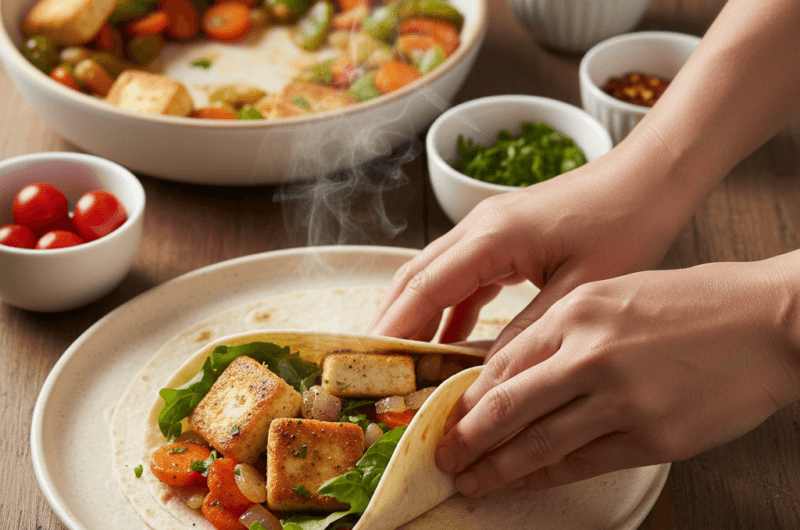
The next day, I often use leftovers as a sandwich or wrap filling, which instantly turns one dish into a completely different meal. You can also spoon it over toast or stuff it into flatbreads to stretch it further. If you’re working with very small portions, adding a scrambled egg or mixing it with cooked rice can make it more filling without adding much cost.
From a budget perspective, this kind of reuse is invaluable. Instead of cooking something new each time, you’re repurposing one affordable base into multiple meals, reducing both food waste and cooking time while still eating something homemade and satisfying.