The Best Fluffy Pancakes recipe you will fall in love with. Full of tips and tricks to help you make the best pancakes.


Table of Contents
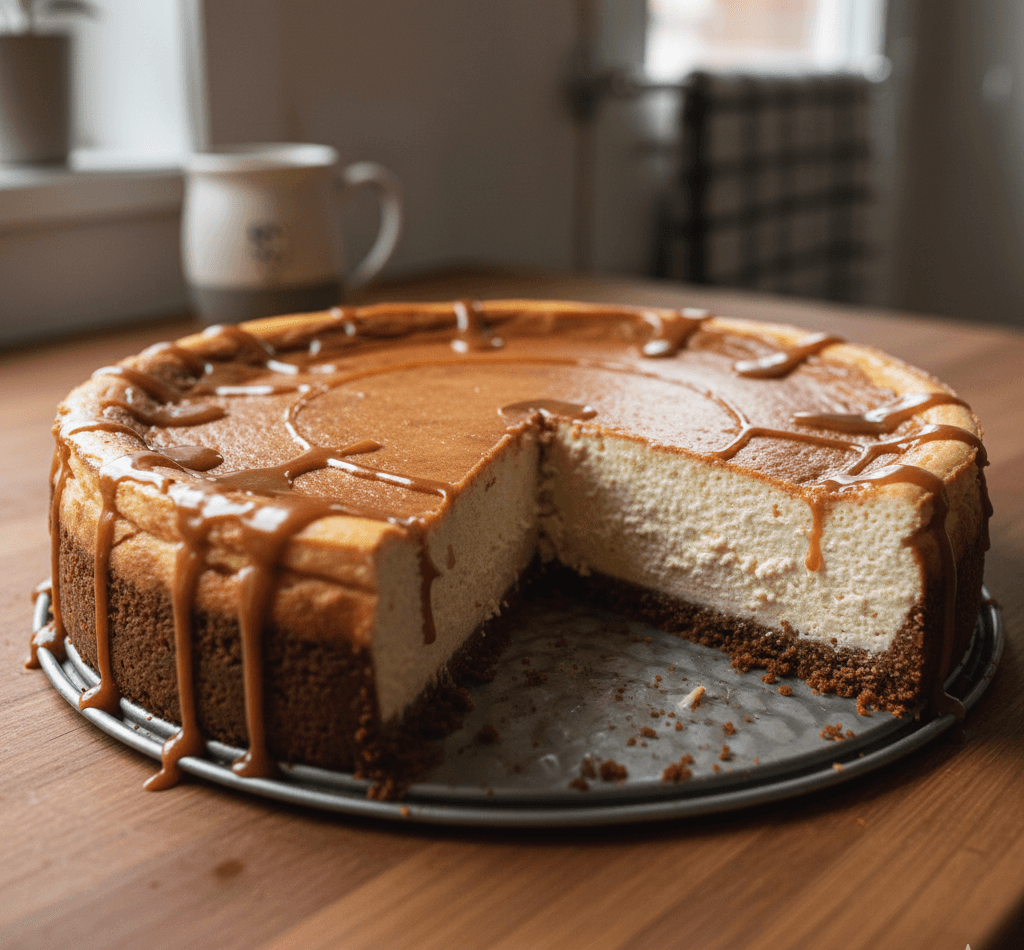
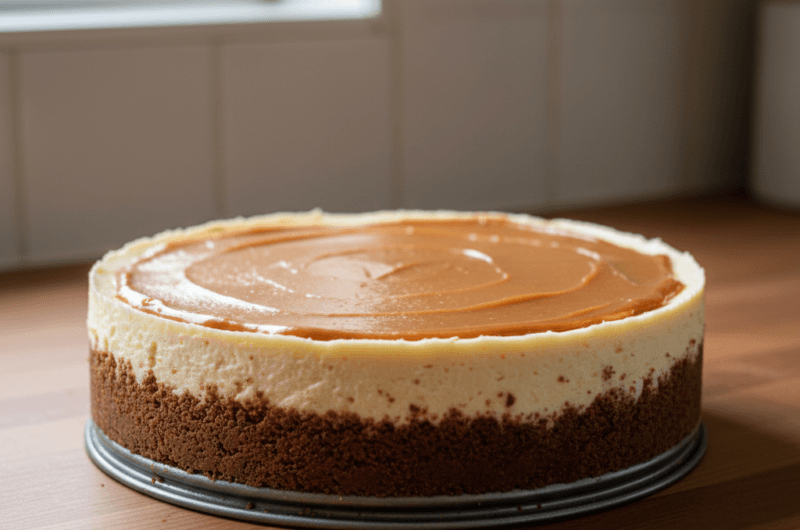
Biscoff cheesecake is a rich, creamy baked cheesecake made with a spiced Biscoff cookie crust, a smooth vanilla-cinnamon cream cheese filling, and a silky salted caramel topping. This recipe is designed for home bakers who want a deeply indulgent dessert that feels bakery-level but is still approachable with the right guidance.
I’ve made many cheesecakes over the years, but Biscoff-based ones are always the first to disappear. There’s something about the caramelized spice of the cookies paired with a classic cheesecake filling that feels both comforting and luxurious. This version has become one of my most requested desserts because it delivers bold flavor without unnecessary complexity, as long as you understand why each step matters.
What This Biscoff Cheesecake Is
Biscoff cheesecake is a baked cheesecake with a spiced cookie crust, a dense yet creamy filling, and a poured caramel topping that adds balance and contrast.
Technically, this cheesecake works because the crust is compact and stable, the filling is emulsified slowly to avoid excess air, and the caramel adds richness without overwhelming the cheesecake itself. Greek yogurt softens the cream cheese structure, while eggs provide just enough setting power to keep slices clean but creamy.
A common mistake is treating this like a light no-bake cheesecake. This is a fully baked dessert that relies on controlled mixing, gentle baking, and proper cooling to achieve its signature texture.
Why Make This Cheesecake at Home
Making Biscoff cheesecake at home gives you control over sweetness, texture, and balance.
Store-bought cheesecakes are often overly sweet and lack depth. When you bake it yourself, you decide how firm the filling is, how salty the caramel tastes, and how thick the crust should be. You can also bake it fresh, which makes a noticeable difference in flavor and mouthfeel.
I prefer making this at home because it improves over time. The cheesecake firms up beautifully overnight, and the caramel settles into a smooth, glossy layer that tastes even better the next day.
Key Ingredients and Why They Matter
The most important ingredient in this recipe is full-fat cream cheese, which forms the structure and richness of the cheesecake.
Biscoff cookies create a crust that’s both spiced and caramelized, adding flavor that plain biscuits can’t replicate. Butter binds the crust and keeps it sliceable. Granulated sugar sweetens without overpowering, while Greek yogurt adds creaminess and prevents the filling from feeling heavy.
Eggs provide structure, but using them gently is key. Vanilla and cinnamon round out the flavor profile, enhancing the Biscoff notes without competing. For the caramel, sugar, butter, cream, and salt work together to create depth, sweetness, and contrast.
Easy Biscoff Cheesecake With Salted Caramel
Course: DessertCuisine: AmericanDifficulty: MediumServings
12
slicesPrep time
30
minutesBaking time
1
hourCalories
300
kcalChilling Time
6
hoursTotal time
7
hours30
minutesIngredients
- For the Biscoff Crust
Biscoff cookies – 350 grams (about 45 cookies)
Unsalted butter, melted – 150 grams
- For the Cheesecake Filling
Cream cheese – 750 grams (3 bricks), softened to room temperature
Granulated sugar – 150 grams
Greek yogurt – 250 grams, room temperature
Vanilla extract – 1 tablespoon
Ground cinnamon – 1 teaspoon
Large eggs – 4, room temperature
- For the Salted Caramel
Granulated sugar – 150 grams
Heavy cream – 150 grams, room temperature
Unsalted butter – 60 grams, room temperature
Salt – ½ teaspoon
Directions
- Preparing the Biscoff Crust
The Biscoff cookies are crushed into fine, even crumbs. Fine crumbs are important because they compact tightly and prevent crumbling during slicing. Melted butter is mixed thoroughly into the crumbs until every bit is coated.
The mixture is pressed firmly into the base of a lined springform pan. I always press slightly up the sides as well, which helps frame the filling and keeps slices neat. Chilling the crust while preparing the filling allows the butter to firm up and lock the crumbs in place. - Mixing the Cheesecake Filling
Cream cheese is beaten slowly until completely smooth. This step should never be rushed. Any lumps left here will show in the final cake. Sugar is added next and mixed just until incorporated.
Greek yogurt, vanilla, and cinnamon are blended in gently. At this stage, the mixture should look glossy and smooth. Eggs are added one at a time, mixed on low speed. Overmixing here introduces too much air, which can cause cracks later.
From experience, slow mixing creates a denser, creamier cheesecake with fewer surface imperfections. - Baking the Cheesecake
The filling is poured over the chilled crust and smoothed evenly. The cheesecake is baked at moderate heat until the edges are set and the center still has a slight wobble.
This wobble is intentional. Cheesecake continues to cook as it cools, and baking until fully firm often leads to dryness. I always turn the oven off, crack the door slightly, and let the cheesecake cool gradually to reduce sudden temperature changes. - Cooling and Setting
Once removed from the oven, the cheesecake cools at room temperature before being refrigerated. This slow cooling process prevents cracking and helps the texture set evenly.
I’ve learned that rushing this step is one of the most common cheesecake mistakes. Proper chilling is what gives you clean slices and a creamy interior. - Making the Salted Caramel
Granulated sugar is melted gently until it turns a deep amber color. Warm cream is added slowly, followed by butter and salt. The mixture is stirred until smooth and glossy.
Caramel thickens as it cools, so it should be slightly fluid when poured. I prefer making it just before serving or slightly ahead so it stays pourable. - Finishing the Cheesecake
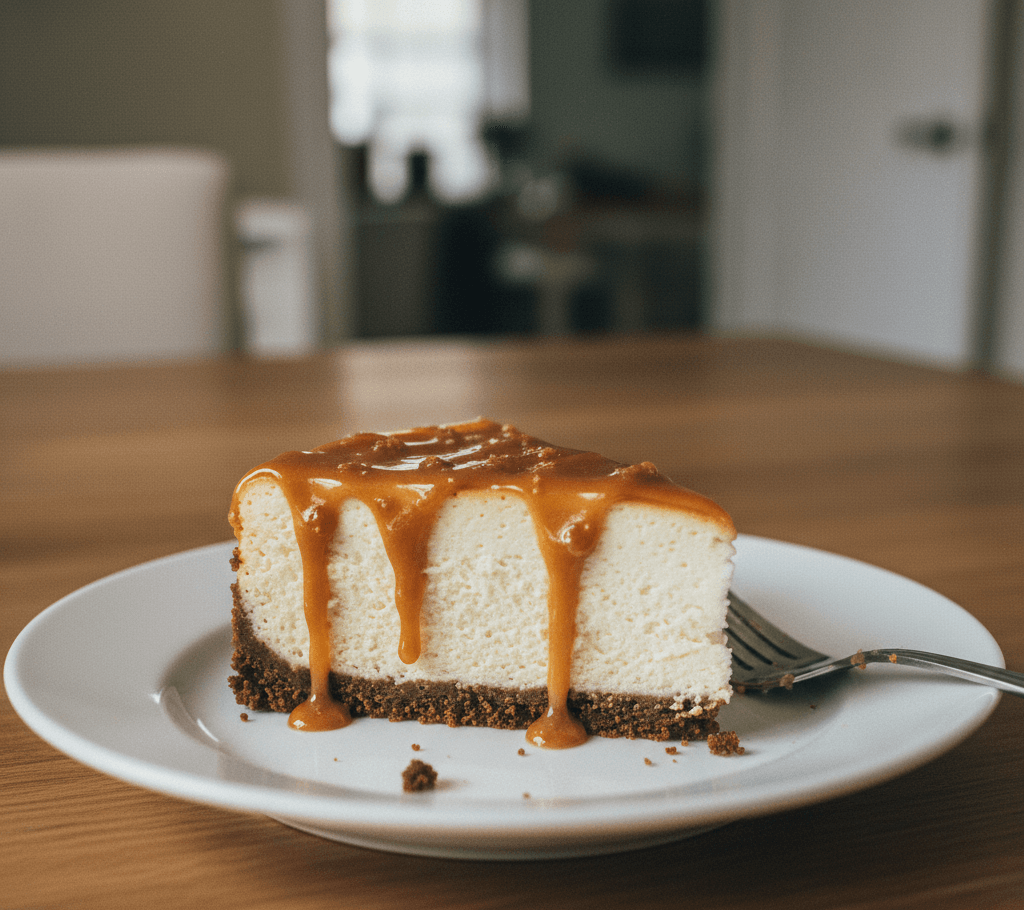
Once fully chilled, the cheesecake is topped with salted caramel. The contrast between the cool, creamy filling and the warm caramel is what makes this dessert so satisfying.
Notes
- Most cheesecake problems come from temperature issues rather than ingredients. Room-temperature dairy blends smoothly and bakes evenly.
- For first-time bakers, patience matters more than perfection. Cheesecake rewards slow mixing, gentle baking, and full chilling time.
- If small surface cracks appear, the caramel topping hides them completely. I’ve served cracked cheesecakes many times, and no one ever notices once the caramel is added.
How to Know When the Cheesecake Is Ready
The cheesecake is ready when the edges are firm and the center jiggles slightly when the pan is gently shaken.
Visually, the surface should look set and matte, not wet or glossy. The center should move as one piece rather than rippling. After chilling, the cheesecake should feel firm but creamy when pressed lightly.
A properly baked cheesecake slices cleanly without collapsing. The aroma will be lightly sweet and vanilla-forward, without eggy notes, which indicates it has baked evenly.
Common Problems and Fixes
Why did my cheesecake crack?
Cracks usually form from overbaking or sudden temperature changes. Baking gently and cooling slowly helps prevent this.
Why is my cheesecake dense or dry?
Overmixing eggs or baking too long can cause dryness. Mixing on low speed and removing the cheesecake while slightly wobbly preserves creaminess.
Why is my caramel grainy?
Sugar may have crystallized or overheated. Using gentle heat and stirring only when necessary helps maintain smoothness.
Can I fix a cheesecake that didn’t set?
In many cases, additional chilling time firms it up. Cheesecake continues to set as it cools.
Storage and Maintenance
Short-Term Storage
This cheesecake should be stored covered in the refrigerator. It keeps well for up to four days, maintaining both structure and flavor.
Long-Term Storage
The cheesecake can be frozen without the caramel topping. Wrapped tightly, it keeps for up to two months. Thaw overnight in the refrigerator before topping.
Serving and Revival
For best texture, remove the cheesecake from the refrigerator about 10 minutes before slicing. I always wipe the knife clean between cuts to keep slices sharp and professional-looking.
How to Use This Recipe Next
This Biscoff cheesecake works beautifully as a celebration dessert, a holiday centerpiece, or a make-ahead option for gatherings. It pairs well with coffee, lightly whipped cream, or fresh berries. If you enjoy this style, it naturally leads into other caramel-based cheesecakes and spiced cookie desserts, making it a strong foundation for expanding your SavoryTribe collection.