The Best Fluffy Pancakes recipe you will fall in love with. Full of tips and tricks to help you make the best pancakes.

Baking Tips & Conversions
How Many Grams in a Cup of Flour?
1 cup of all-purpose flour weighs 125 grams when measured correctly using the spoon-and-level method. But bread flour, cake flour, whole wheat, almond flour, and every other variety weigh differently — and the way you fill the cup changes the number by up to 40 grams. This guide covers every flour type with a complete gram conversion table.
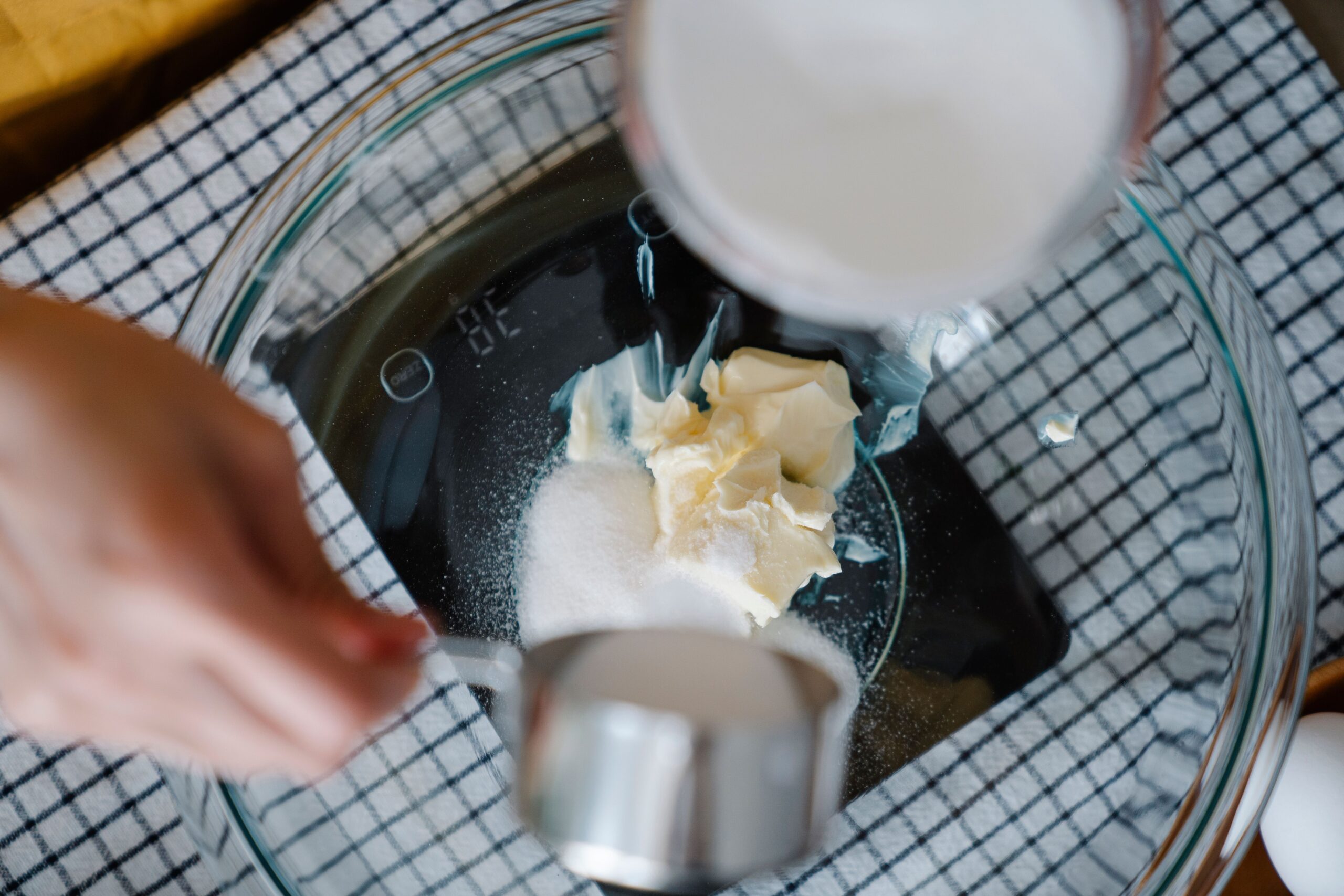
The same measuring cup, filled two different ways, can weigh anywhere from 125g to 165g — a difference large enough to change the outcome of most baked goods.
⚡ Quick answer
1 cup of all-purpose flour = 125 grams (4.4 oz), measured using the spoon-and-level method.
Scooping the cup directly from the bag gives 150–165g — up to 32% more flour than intended. Bread flour: 130g. Cake flour: 100g. Whole wheat flour: 130g. Almond flour: 96g. Oat flour: 92g. The full conversion table below covers every common flour type across all fractional cup amounts.
The gram weight of a cup of flour is not a fixed number — it depends on two things: the type of flour and how the cup was filled. These aren’t minor variables. Cake flour weighs 100g per cup while bread flour weighs 130g — a 30% difference between two flours that might look almost identical in the bag. And a scooped cup of all-purpose flour weighs up to 165g while a properly spooned cup weighs 125g — a 40g difference that, across a recipe using 3 cups of flour, amounts to the equivalent of an extra 120g of flour hidden in the measurement.
This matters because nearly every US baking recipe written in cups was developed at a specific gram weight — usually 120–125g per cup for all-purpose flour. When a recipe says “2 cups of flour,” the developer measured those cups by spooning, not scooping. If you scoop, you’re adding a full extra cup’s worth of flour across 3–4 cups, which is why so many home bakers consistently get denser, drier results than the recipe photo suggests.
The fastest solution is to use gram weights instead of cups. But if you’re working from a recipe that only gives cup measurements, the table below tells you exactly what the recipe developer most likely intended — so you can weigh the flour directly rather than trusting your cup technique.
125g
1 cup all-purpose flour — spoon & level
100g
1 cup cake flour — lightest common flour
130g
1 cup bread flour or whole wheat
96g
1 cup almond flour — lightest alternative
Grams in a Cup of Flour — All Types
All weights below use the spoon-and-level method in a standard US cup (240ml) unless noted. For any flour type or cup amount not shown here, use the Ingredient Converter to get the exact gram weight instantly.
| Flour Type | 1 cup (g) | ¾ cup (g) | ½ cup (g) | ⅓ cup (g) | ¼ cup (g) |
|---|---|---|---|---|---|
| All-purpose flour | 125g | 94g | 63g | 42g | 31g |
| Bread flour | 130g | 98g | 65g | 43g | 33g |
| Cake flour | 100g | 75g | 50g | 33g | 25g |
| Pastry flour | 110g | 83g | 55g | 37g | 28g |
| Whole wheat flour | 130g | 98g | 65g | 43g | 33g |
| Whole wheat flour (white) | 120g | 90g | 60g | 40g | 30g |
| Almond flour (blanched) | 96g | 72g | 48g | 32g | 24g |
| Oat flour | 92g | 69g | 46g | 31g | 23g |
| Coconut flour | 112g | 84g | 56g | 37g | 28g |
| Rye flour (light) | 102g | 77g | 51g | 34g | 26g |
| Rye flour (dark / whole) | 128g | 96g | 64g | 43g | 32g |
| Spelt flour | 118g | 89g | 59g | 39g | 30g |
| Gluten-free blend (commercial) | 140g | 105g | 70g | 47g | 35g |
| Rice flour (white) | 158g | 119g | 79g | 53g | 40g |
| All weights use the spoon-and-level method in a standard US cup (240ml). Scooping adds 20–32% to most wheat flours and 15–20% to alternative flours. Gluten-free blends vary by brand — check the packaging, as proprietary blend densities differ. Rice flour is significantly denser than other flours; measure by weight wherever possible. | |||||
Rice flour is an outlier: At 158g per cup, it’s the densest common flour in the table — nearly 60% heavier per cup than oat flour. Using rice flour as a 1:1 cup substitute for all-purpose flour in a GF recipe will over-flour the bake significantly unless the recipe was specifically developed for rice flour’s density. Always substitute GF flours by weight, not by cup.
SavoryTribe Baking Tool
Ingredient Converter
Convert any flour — all-purpose, bread, cake, almond, oat, coconut, rye, spelt — from cups or tablespoons to exact grams. Select the flour type and get the correct weight instantly.
All-Purpose Flour: Grams for Every Common Amount
All-purpose flour is the reference point for most baking conversions. This table covers every standard US cup fraction and spoon measurement — the numbers most commonly needed when following a recipe or scaling one up or down.
| Amount | Grams | Ounces |
|---|---|---|
| 3 cups | 375g | 13.2 oz |
| 2 cups | 250g | 8.8 oz |
| 1½ cups | 188g | 6.6 oz |
| 1 cup | 125g | 4.4 oz |
| ¾ cup | 94g | 3.3 oz |
| ⅔ cup | 83g | 2.9 oz |
| ½ cup | 63g | 2.2 oz |
| ⅓ cup | 42g | 1.5 oz |
| ¼ cup | 31g | 1.1 oz |
| 1 tablespoon | 8g | 0.28 oz |
| 1 teaspoon | 2.6g | 0.09 oz |
| All-purpose flour only, spoon-and-level method, standard US cup (240ml). For bread, cake, whole wheat, and alternative flours, refer to the full type table above. | ||
Why Different Flour Types Weigh Differently
The weight difference between flour varieties isn’t arbitrary — it comes directly from the physical composition of each flour type. Understanding why helps you predict which direction to adjust when substituting one flour for another.
Protein Content and Particle Size
Bread flour has a higher protein content (12–14%) than all-purpose (10–12%) and cake flour (6–8%). Higher-protein flours are milled slightly coarser, and coarser particles pack more densely per volume — which is why bread flour weighs 130g per cup vs all-purpose at 125g. Cake flour, by contrast, is milled to a very fine powder specifically to reduce protein and gluten development. Those ultra-fine particles trap more air per cup, giving a significantly lighter measurement at just 100g per cup. This is why using all-purpose flour as a 1:1 cup substitute for cake flour adds 25% more flour by weight — the standard correction is to remove 2 tablespoons per cup of all-purpose to approximate cake flour’s weight, or to substitute by grams directly.
Whole Grain vs Refined Flour
Whole wheat flour retains the bran and germ that white flours have had removed. These coarser particles are denser, which is why whole wheat flour weighs 130g per cup vs 125g for all-purpose. The bran also absorbs water differently — which means a recipe substituting whole wheat for white flour cup-for-cup will produce a noticeably denser, drier result even with the same gram weight. For whole wheat substitutions, the standard adjustment is to replace no more than 50% of the white flour with whole wheat, or to add 1–2 tablespoons of additional liquid per cup substituted.
Alternative and Gluten-Free Flours
Almond flour (96g/cup) and oat flour (92g/cup) are among the lightest flours by volume because both are made from relatively low-density ground nuts and grains respectively. Coconut flour sits in the middle at 112g/cup but is extremely moisture-absorbent — it soaks up 4–6× more liquid than wheat flour, which is why recipes using coconut flour typically call for far less flour by volume than wheat-based equivalents. Commercial GF blends are the heaviest at 140g/cup because most are starch-based (potato starch, tapioca starch, rice flour) and starches are significantly denser than wheat proteins at the same particle size.
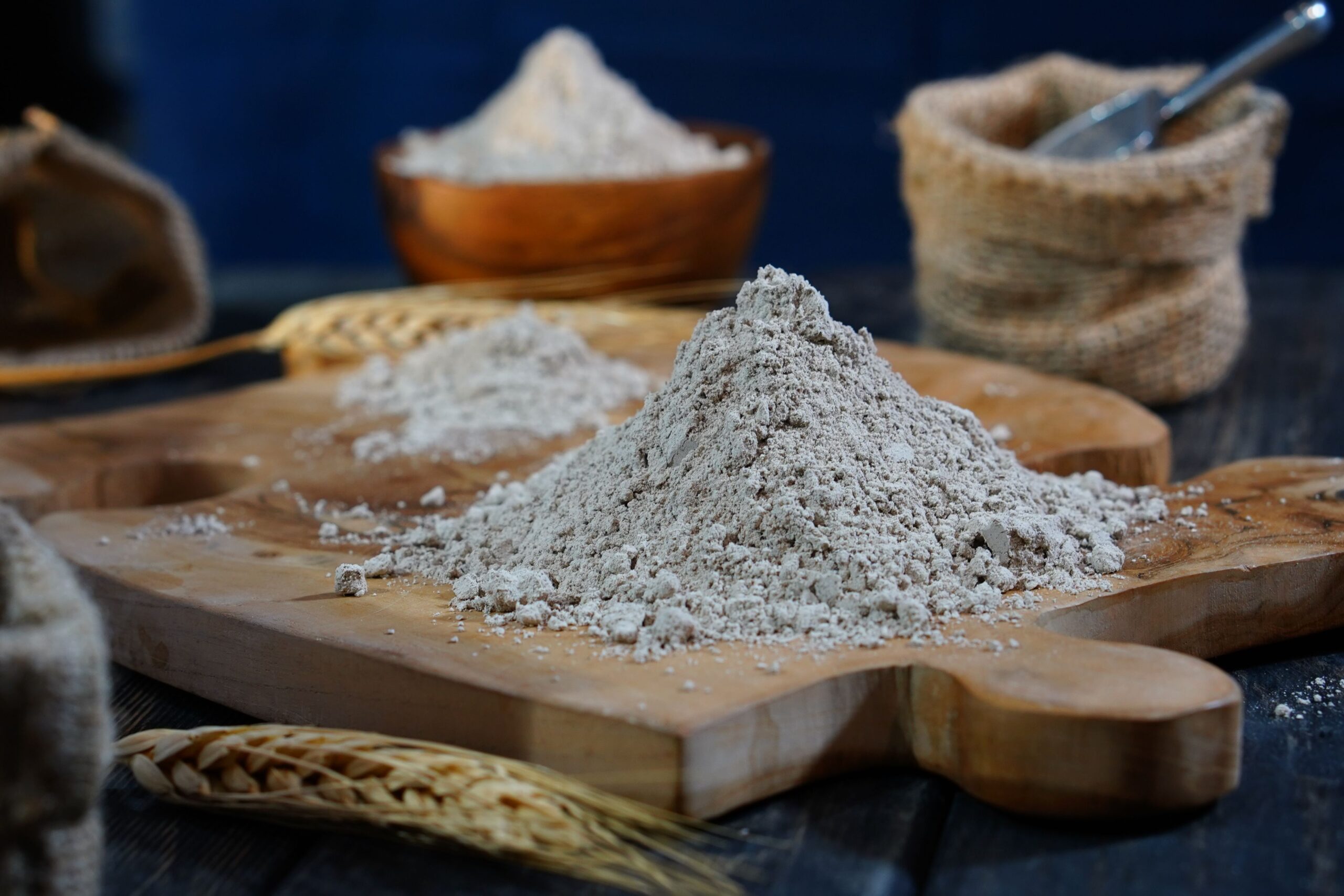
Visual differences between flour types reflect real density differences — the coarser, darker, or denser a flour looks, the more it typically weighs per cup.
Does Brand Affect Flour Weight per Cup?
Yes — slightly, and it’s worth knowing about for high-stakes baking. Different brands of the same flour type mill to slightly different particle sizes, resulting in 3–8g variation per cup even when measured identically. King Arthur All-Purpose Flour, for example, specifies 120g per cup on their website. Bob’s Red Mill All-Purpose lists 130g. Most other brands land in the 125g range. For bread baking and precision pastry work, the safest approach is to find the gram weight that your specific brand’s website or packaging specifies and use that as your reference.
For everyday home baking — cookies, muffins, quick breads — this 3–8g brand variation is small enough to fall within normal recipe tolerance and won’t noticeably affect results. The much larger source of error is always measuring technique, not brand choice. A 40g discrepancy from scooping matters far more than a 5g discrepancy between brands.
❌ Substituting by Cup
All-purpose for cake flour (1:1 cup)
1 cup all-purpose = 125g. 1 cup cake flour = 100g. Using them interchangeably at 1 cup each adds 25% more flour than the recipe needs — producing a noticeably denser, tighter-crumbed cake every time.
✅ Substituting by Weight
All-purpose for cake flour (by grams)
If the recipe calls for 100g cake flour, use 100g all-purpose. Same weight, same flour volume in the batter, same structural result. Weight-based substitution works correctly every time regardless of flour type.
Coconut flour cannot substitute for wheat flour cup-for-cup under any circumstances. It absorbs 4–6× more liquid than wheat flour. A recipe developed for 1 cup of all-purpose flour (125g) would need only 2–3 tablespoons of coconut flour (about 20–25g) to achieve a comparable result — and even then, the additional liquid in the recipe needs to be increased significantly. Coconut flour recipes are specifically formulated for coconut flour’s unique absorption properties and should be followed as written rather than adapted from wheat-based originals.
Weighing flour directly into the mixing bowl — tare, pour, done. No cup, no spoon, no technique variation.
Key Takeaways
- 1 cup of all-purpose flour = 125g using the spoon-and-level method. Scooping gives 150–165g — up to 32% more than intended.
- Cake flour is the lightest at 100g per cup. Bread and whole wheat flour are 130g. Gluten-free commercial blends are the heaviest at 140g. Rice flour is densest at 158g.
- Alternative flours — almond (96g), oat (92g), coconut (112g) — cannot be substituted cup-for-cup for wheat flour due to density and absorption differences. Always substitute by grams.
- Brand variation adds up to 5–8g per cup between major flour brands. For precision baking, use your specific brand’s stated gram weight.
- Coconut flour cannot substitute for wheat flour in any 1:1 ratio — it absorbs 4–6× more liquid and requires a recipe specifically written for it.
- For any flour type, any cup fraction, and any substitution — use the SavoryTribe Ingredient Converter for exact gram weights.
Frequently Asked Questions
How many grams is 1 cup of flour?
1 cup of all-purpose flour = 125g using the spoon-and-level method (the US baking standard). Bread flour = 130g. Cake flour = 100g. Whole wheat flour = 130g. Almond flour = 96g. Oat flour = 92g. Coconut flour = 112g. Gluten-free commercial blend = 140g. Rice flour = 158g. All figures use a standard US cup (240ml). Scooping the cup directly from the bag adds 20–32% to the weight for most wheat flours.
How many grams is 2 cups of flour?
2 cups of all-purpose flour = 250g (spoon-and-level). 2 cups of bread flour = 260g. 2 cups of cake flour = 200g. 2 cups of whole wheat = 260g. 2 cups of almond flour = 192g. For any other flour type, multiply the 1-cup gram weight from the table above by 2, or use the Ingredient Converter for any amount instantly.
How many grams is ½ cup of flour?
½ cup of all-purpose flour = 63g. ½ cup of bread flour = 65g. ½ cup of cake flour = 50g. ½ cup of whole wheat = 65g. ½ cup of almond flour = 48g. ½ cup of oat flour = 46g. These half-cup weights come up frequently in baking recipes and are worth bookmarking for quick reference. For complete fractional amounts, the all-purpose flour table earlier in this post covers every standard measurement from 3 cups down to 1 teaspoon.
Is cake flour the same weight as all-purpose flour per cup?
No — this is one of the most important flour weight differences to know. 1 cup of cake flour = 100g, while 1 cup of all-purpose flour = 125g. That’s 25% more all-purpose flour per cup than cake flour. If you substitute all-purpose for cake flour in equal cup amounts without adjusting, you’re adding significantly more flour than the recipe requires, which is why cakes made this way are consistently denser. The correct substitution: for each cup of cake flour, use ¾ cup + 2 tablespoons of all-purpose flour — or better, just weigh out 100g.
How many grams is a cup of almond flour?
1 cup of blanched almond flour = 96g. This makes it one of the lightest flours by volume — significantly lighter than all-purpose (125g) and especially light compared to gluten-free blends (140g) or rice flour (158g). Almond flour cannot be substituted for wheat flour in a 1:1 cup or weight ratio — it has no gluten, high fat content, and very different binding properties. Recipes using almond flour are specifically formulated for it. For almond flour baking, follow the gram weight in the original recipe exactly rather than converting from a wheat flour equivalent.
Why does the same flour weigh different amounts depending on the brand?
Different flour brands mill their flour to slightly different particle sizes and blend winter and spring wheat varieties in different ratios, resulting in small but real density differences. King Arthur All-Purpose specifies 120g per cup on their site; Bob’s Red Mill lists 130g; most other brands fall around 125g. For most everyday baking, this 5–10g variation falls within recipe tolerance and won’t affect results noticeably. For high-precision baking — bread, croissants, macarons — use the gram weight your specific brand specifies, or weigh to the gram regardless.
Can I use cups for flour if I don’t have a kitchen scale?
Yes — cups work fine for most everyday baking as long as you use the spoon-and-level method consistently. Fluff the flour first, spoon it lightly into the cup, level off with a straight edge without pressing. This gives approximately 125g per cup of all-purpose flour and produces reliable results in cookies, muffins, quick breads, and simple cakes. For precision baking — macarons, croissants, laminated doughs, delicate sponge cakes — a kitchen scale is genuinely worth the investment. They cost under £15 / $15 and eliminate the single largest source of variation in home baking.
SavoryTribe Baking Tool
Ingredient Converter
Every flour type, any cup fraction, exact grams — select your flour and get the weight instantly. Includes all-purpose, bread, cake, almond, oat, coconut, rye, spelt, and GF blends.