The Best Fluffy Pancakes recipe you will fall in love with. Full of tips and tricks to help you make the best pancakes.

Baking Tips & Conversions
How to Measure Flour Correctly
Scooping flour directly from the bag is the single most common baking mistake — it packs in 20–40% more flour than the recipe intends and is the leading cause of dense, dry baked goods. The correct method is spoon-and-level, and it takes ten seconds. Here’s exactly how it works, why it matters, and when to switch to grams instead.
⚡ Quick answer
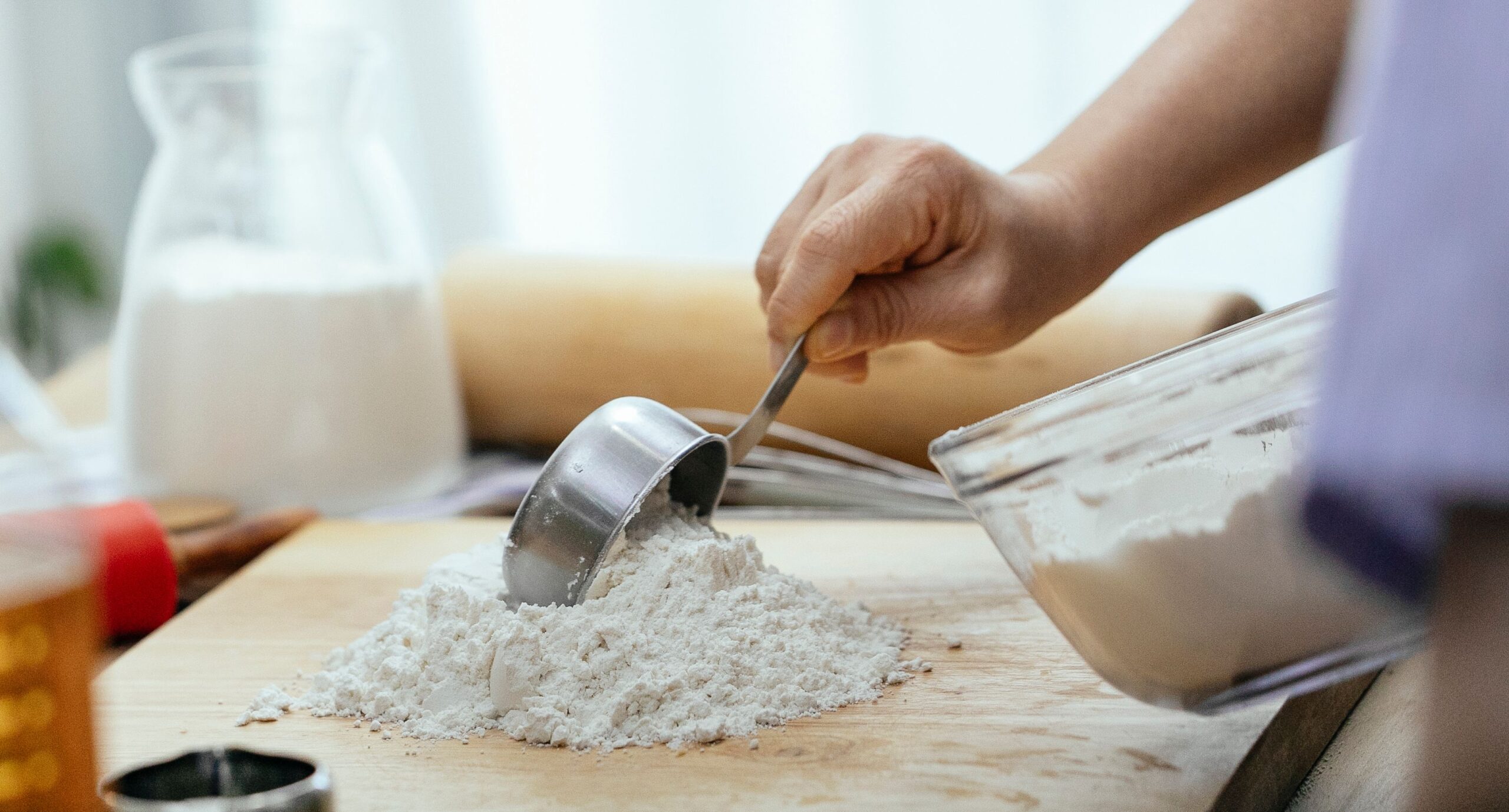
To measure flour correctly: fluff the flour in the bag, spoon it into the measuring cup until slightly overfilled, then level off the top with a straight edge. Do not scoop.
This is the spoon-and-level method. It gives approximately 125g per cup of all-purpose flour — the weight most US recipes are developed around. Scooping directly packs in 150–165g, which adds 20–32% more flour than intended. For precision baking, skip cups entirely and weigh in grams using the Ingredient Converter to get exact weights.
The problem with flour measurement is invisible. A packed cup and a properly measured cup look identical once levelled — the difference is entirely in the weight, and that weight difference is substantial enough to change the outcome of almost every bake. Add 25–30 extra grams of flour to a batch of cookies and they spread less, bake drier, and lose the chew. Do the same to a cake batter and the crumb tightens, rises less, and tastes floury. Do it to bread dough and the hydration drops far enough to affect gluten development and final texture.
The reason most home bakers don’t realise this is happening is that they always measure the same way — so results are consistent, just consistently off from what the recipe developer intended. If your baked goods are reliably denser or drier than they should be, incorrect flour measurement is the most likely cause, and it’s the easiest fix in baking.
There are three measuring methods in common use: spoon-and-level (the US standard), scoop-and-level (the common mistake), and weighing in grams (the professional standard). Each produces a meaningfully different amount of flour. The table below shows exactly how much each method adds, and the sections that follow explain when each approach is appropriate and how to execute it correctly.
125g
1 cup flour — spoon-and-level (correct)
150–165g
1 cup flour — scooped directly (too much)
+32%
Maximum excess flour from scooping vs spooning
±2g
Accuracy of weighing on a kitchen scale
Three Ways to Measure Flour — And What Each Gives You
Not all flour measurement is equal. These three methods produce different weights from the same measuring cup, and understanding the difference explains why recipes can fail even when you follow every instruction exactly.
Spoon & Level
~125g
Flour spooned into the cup from a separate container, then levelled with a straight edge. The US standard — most American recipes are developed at this weight. Reliable if done consistently.
Scoop & Level
~150–165g
Cup scooped directly into the flour bag then levelled. Packs flour under compression, adding 20–32% more than intended. The most common measuring mistake — produces dense, dry results.
Weigh in Grams
±2g
Flour measured on a digital kitchen scale. No technique variation, no packing, no humidity effect. The professional standard — accurate every time regardless of who’s measuring.
Flour Weight per Cup by Type and Method
Different flour types also have different gram weights per cup — cake flour is lighter than all-purpose, bread flour is heavier. The table below covers every common flour variety across both the spoon-and-level and scoop methods, so you can see exactly how far off a packed measurement is for each type.
| Flour Type | Spoon & Level (g) | Scooped (g) | Difference (g) | Best Use |
|---|---|---|---|---|
| All-purpose flour | 125g | 150–165g | +25–40g | Cookies, cakes, muffins, bread |
| Bread flour | 130g | 155–170g | +25–40g | Yeast breads, pizza dough, rolls |
| Cake flour | 100g | 120–130g | +20–30g | Layer cakes, cupcakes, chiffon |
| Pastry flour | 110g | 130–145g | +20–35g | Pie crusts, biscuits, scones |
| Whole wheat flour | 130g | 155–170g | +25–40g | Hearty breads, muffins, pancakes |
| Almond flour | 96g | 110–120g | +14–24g | Keto baking, macarons, cookies |
| Oat flour | 92g | 105–115g | +13–23g | Pancakes, muffins, GF baking |
| Coconut flour | 112g | 130–145g | +18–33g | Low-carb baking, keto recipes |
| Gluten-free blend (commercial) | 140g | 165–180g | +25–40g | GF adaptations of standard recipes |
| All spoon-and-level weights are for a standard US cup (240ml). Scooped weights vary based on compression force and flour density — the range given reflects typical variation. For consistent results across all flour types, use gram weights. Convert any cup amount with the Ingredient Converter. | ||||
Cake flour is the most weight-sensitive flour in common use. At 100g per cup (spoon-and-level), it has the lowest density of standard flours — scooping adds 20–30% and produces noticeably denser, tighter-crumbed cakes. If you bake layer cakes or sponge cakes and the crumb is always denser than expected, incorrect cake flour measurement is frequently the cause. Use the Ingredient Converter to verify gram weights before your next bake.
SavoryTribe Baking Tool
Ingredient Converter
Convert any flour type from cups to grams — all-purpose, bread, cake, almond, oat, coconut, and more. Select your flour type and get the exact gram weight for any cup amount.
How to Measure Flour Correctly: Step by Step
The spoon-and-level method takes about ten seconds per cup and eliminates the single most common source of baking failure. Here’s the exact technique.
1
Fluff the flour in its container first
Flour settles and compresses during storage — even without scooping, flour that’s been sitting undisturbed in a bag or canister is denser than freshly opened flour. Before measuring, use a spoon or whisk to stir and aerate the flour for about 15 seconds. This loosens the particles, brings it back to its natural density, and ensures your measurement reflects what the recipe developer intended. Skip this step and even spoon-and-level measurements can run 10–15g heavy per cup.
2
Spoon flour lightly into the measuring cup
Use a separate spoon — not the measuring cup itself — to transfer flour from the container into the cup. Add flour one spoonful at a time, letting it fall in loosely without pressing, shaking, or tapping. The cup should fill up with light, airy flour that mounds slightly above the rim. The key is zero downward pressure at any stage — flour is surprisingly easy to compress, and even a gentle tap against the counter adds 5–10g per cup.
3
Level off with a straight edge in one sweep
Hold the measuring cup steady and draw a straight-edged tool — the back of a butter knife, an offset spatula, or even a chopstick — across the top of the cup in a single smooth sweep toward you. This removes the excess mound and leaves a perfectly flat, level surface. Do this over the flour container so the excess falls back in. Don’t press down as you level — let the straight edge skim the rim surface only. One sweep is all it takes; re-levelling compresses the flour.
4
Add directly to the recipe — don’t re-sift unless specified
Transfer the levelled cup directly to your mixing bowl or bowl with the other dry ingredients. Unless the recipe explicitly says “1 cup sifted flour” — meaning you should sift into the cup — you don’t need to sift as part of the measuring process. Note that “1 cup flour, sifted” (sifted after measuring) is different from “1 cup sifted flour” (sifted before measuring). The first means sift after you’ve measured 125g; the second means sift first, then measure from the sifted pile, giving a lighter, lower-weight cup.
Why Weighing in Grams Is Better Than Any Cup Method
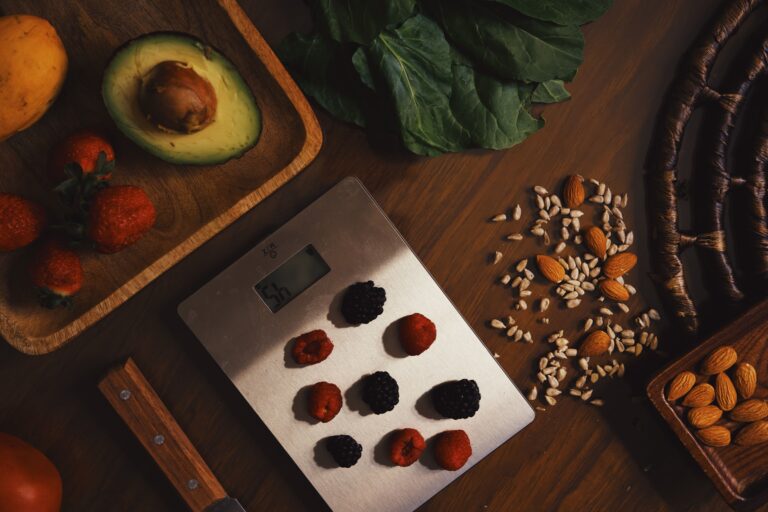
Even a perfectly executed spoon-and-level measurement has inherent variation. Different people pour with different force. Flour absorbs ambient humidity — a cup measured on a dry winter day weighs less than the same cup measured on a humid summer day, by as much as 5–8g. The flour at the bottom of a bag is always denser than at the top. A kitchen scale removes every one of these variables at once.
The switch is easier than it sounds. Most kitchen scales cost under $15, fit in a drawer, and measure in 1-gram increments — more than precise enough for baking. The workflow changes from “spoon flour, level cup, transfer” to “place bowl on scale, tare to zero, pour flour until display reads 125.” It’s faster and more accurate simultaneously. For any recipe you bake regularly — the one birthday cake, the go-to cookie, the weekly bread — converting the flour quantity to grams once means consistent results every single time thereafter.
British, Australian, and European recipes almost exclusively use gram weights rather than cups, which is why they tend to produce more reliable, consistent results when followed to the letter. When you encounter an American cup-based recipe that produces inconsistent results across different cooks — one person’s cake is perfect, another’s is dense — the difference is almost always flour measurement technique.
When Cups Are Fine and When to Switch to Grams
Cups are fine for: Savoury cooking, sauces, marinades, dressings, most quick breads and muffins (which tolerate more variation), and any recipe you’re making casually where texture precision isn’t critical. If you’re adding flour to a soup to thicken it, measuring cups are completely adequate.
Switch to grams for: Macarons, choux pastry, croissants, croissant-adjacent laminated doughs, soufflés, angel food cake, chiffon cake, delicate sponge cakes, and any recipe explicitly calling for gram weights. Also worth switching to grams for any recipe you’ve tried more than twice with inconsistent results — flour measurement is the first variable to eliminate.
Spoon-and-Level vs Scooping — Side by Side
❌ Scooping (What Most People Do)
125–165g per cup
Dipping the cup directly into the flour bag compresses flour under the rim, packing in 20–32% more than intended. One cup of scooped all-purpose flour can weigh as much as a cup and a quarter of properly measured flour. Results: dense cookies, tight crumb, dry baked goods.
✅ Spoon-and-Level (The Correct Method)
~125g per cup, consistently
Spooning flour loosely into the cup and levelling keeps the density consistent and reproducible. This is the method all major US recipe developers — King Arthur Baking, Sally’s Baking Addiction, Serious Eats — specify when they say “1 cup flour.”
Bread dough is the most sensitive to flour measurement errors. A properly hydrated bread dough requires a precise flour-to-water ratio. Even 20–30g of extra flour per cup can drop the hydration enough to tighten gluten development, reduce oven spring, and produce a dense loaf with a thick, hard crust. If your homemade bread is consistently too dense and isn’t rising well, re-measure your flour using the spoon-and-level method or switch to grams before adjusting yeast or proofing time.
Key Takeaways
- The correct method is spoon-and-level: fluff the flour, spoon it into the cup, level off with a straight edge. Never scoop.
- Scooping flour directly from the bag packs in 20–32% more than intended — the leading cause of dense, dry, over-floury baked goods.
- 1 cup of all-purpose flour (spoon-and-level) = 125g. Cake flour = 100g. Bread flour = 130g. Whole wheat = 130g.
- Fluffing the flour before spooning matters — settled flour is significantly denser than freshly aerated flour, even using the same cup method.
- “1 cup sifted flour” (sift first, then measure) is not the same as “1 cup flour, sifted” (measure first, then sift) — the first gives a lighter cup.
- For consistent results in any precision bake — macarons, choux, laminated dough, sponge cake — switch to gram weights entirely.
- Use the SavoryTribe Ingredient Converter to get exact gram weights for any flour type and any cup amount.
Frequently Asked Questions
What is the correct way to measure flour?
The correct method is spoon-and-level: first fluff the flour in its container with a spoon or whisk to aerate it, then use a spoon to transfer flour loosely into the measuring cup until it’s slightly overfilled. Level off the top with a straight edge — the back of a knife or a flat spatula — in one clean sweep. Don’t tap, shake, or press the cup at any point. This gives approximately 125g per cup of all-purpose flour, which is the weight US recipes are developed around.
How many grams is 1 cup of all-purpose flour?
1 cup of all-purpose flour measured using the spoon-and-level method weighs 125 grams (4.4 oz). Scooped directly from the bag, the same cup can weigh 150–165 grams. The difference — up to 40 grams per cup — is significant in baking. For recipes using multiple cups of flour, this error compounds: a recipe calling for 3 cups could end up with the equivalent of nearly 4 properly measured cups if scooped. Cake flour is lighter at 100g per cup; bread flour is slightly heavier at 130g.
Why should you not scoop flour with the measuring cup?
Scooping the measuring cup directly into the flour bag compresses the flour under the pressure of the cup’s rim as it pushes through the dense flour. This packs significantly more flour into the cup than the recipe developer intended — typically 20–32% more for all-purpose flour. The packed flour appears level and indistinguishable from a correctly measured cup, so there’s no visual cue that anything is wrong. The consequence shows up in the finished bake: denser texture, drier crumb, less spread in cookies, and tighter crumb in cakes and breads.
Should I sift flour before measuring?
Only if the recipe specifically says “1 cup sifted flour” — meaning the flour should be sifted before measuring. This gives a lighter, lower-weight cup than standard spoon-and-level (closer to 110g per cup), and the recipe will have been developed to account for it. If the recipe says “1 cup flour, sifted” — note the comma — it means measure first using spoon-and-level, then sift the measured flour into the bowl. These are different instructions producing different amounts, so read carefully. For most everyday baking, sifting before measuring is not necessary and can under-flour the recipe.
Does it matter how flour is measured for bread?
Yes — bread is the most sensitive common bake to flour measurement errors. Bread dough relies on a specific flour-to-water (hydration) ratio for proper gluten development and fermentation. Too much flour — from scooping instead of spooning — drops the hydration, tightens the dough, restricts yeast activity, and produces a dense loaf with poor oven spring. Even a 15–20g excess per cup is enough to noticeably change the result. For bread baking specifically, switching to gram weights is strongly recommended — it removes all measuring variation and makes the recipe fully reproducible.
What is the difference between a dry measuring cup and a liquid measuring cup?
Dry measuring cups are designed to be filled to the very rim and levelled off — they have a flat top edge specifically for this purpose. Liquid measuring cups are taller with a spout and markings on the side, designed to be read at eye level to avoid a parallax error. Using a liquid measuring cup for flour is technically possible but prone to error — you can’t level it accurately, and it’s easy to over or under-fill when reading from above. For flour and other dry ingredients, always use dry measuring cups with the spoon-and-level method.
Is a kitchen scale worth it for baking?
Yes, without question — a kitchen scale is the single most impactful baking tool after a thermometer. It costs less than most baking accessories, takes up minimal space, and eliminates the primary source of variation in home baking. The workflow is faster than measuring cups — one bowl, one scale, tare between ingredients — and the results are more consistent. Once you bake with a scale for a week, the cup method feels like an unnecessary extra step. Look for a digital scale that reads in 1-gram increments and has a tare function. A capacity of 3–5kg is sufficient for all standard home baking.
SavoryTribe Baking Tool
Ingredient Converter
Convert any flour type — all-purpose, bread, cake, almond, oat, coconut — from cups or tablespoons to exact gram weights. Instant, accurate, every flour type covered.