The Best Fluffy Pancakes recipe you will fall in love with. Full of tips and tricks to help you make the best pancakes.

How Long Does Chicken Last in the Fridge?
Raw chicken lasts 1–2 days in the fridge; cooked chicken lasts 3–4 days. This guide covers every type — whole, parts, ground, and marinated — plus the exact signs of spoilage and the storage mistakes that shorten shelf life.
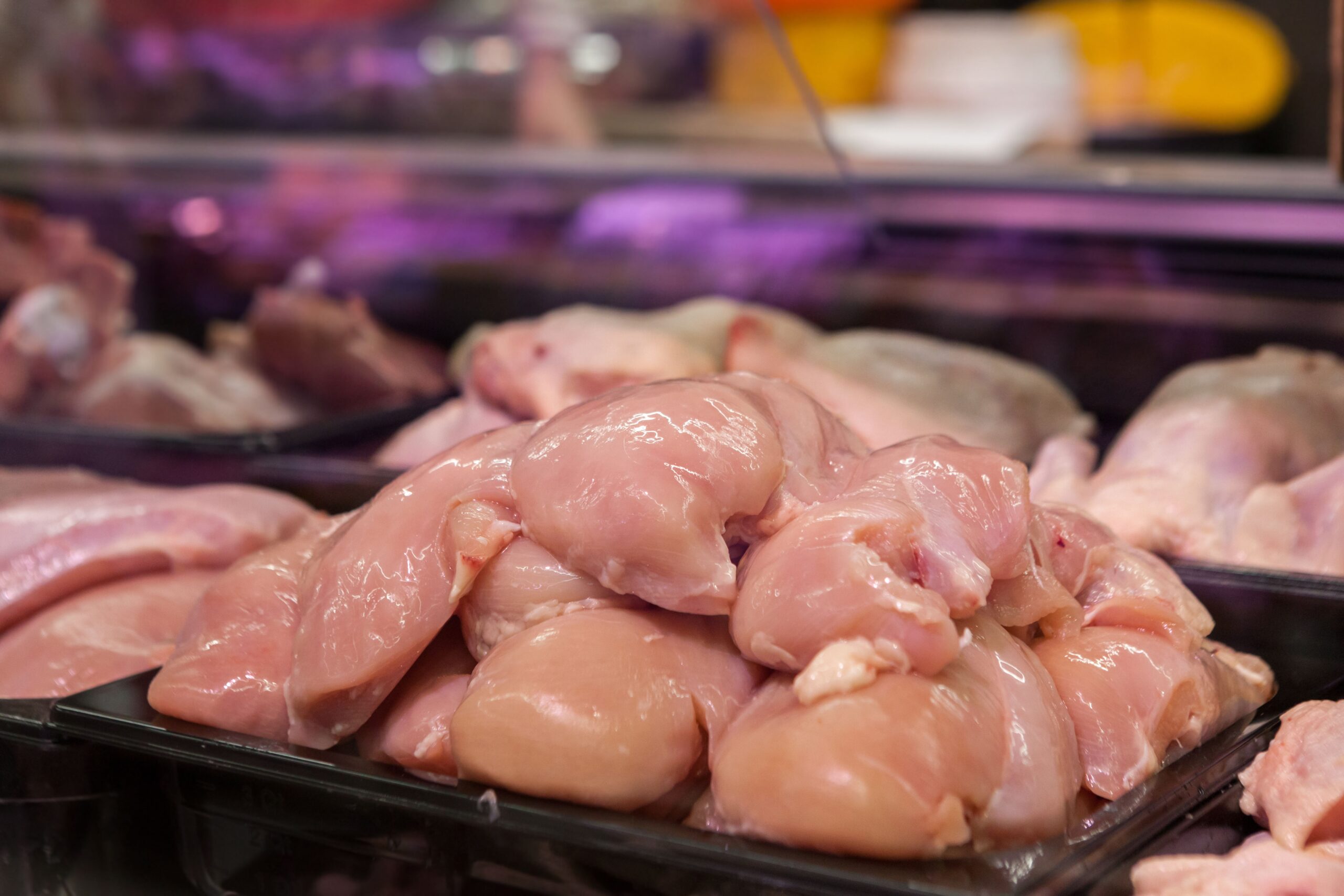
⚡ Quick Answer
Raw chicken lasts 1–2 days in the fridge. Cooked chicken lasts 3–4 days. Both must be stored at or below 40°F (4°C).
These are the USDA’s official safe storage guidelines. The clock starts the moment the chicken reaches your fridge — not the sell-by date on the packaging. If you can’t cook raw chicken within 2 days, freeze it immediately. Frozen raw chicken keeps safely for up to 9 months.
Chicken is one of the most common sources of foodborne illness in the home kitchen. Salmonella and Campylobacter — the two bacteria most associated with raw poultry — can double in number every 20 minutes at room temperature, and neither one produces any smell, discolouration, or texture change in the early stages. That’s what makes the “does it smell okay?” test so unreliable. By the time chicken smells off, the bacterial load may already be well past safe levels.
The 1–2 day rule for raw chicken isn’t arbitrary — it’s based on the rate at which pathogenic bacteria multiply in a domestic refrigerator running at 35–40°F (2–4°C). Most home fridges fluctuate throughout the day, especially near the door. Every time the fridge opens, the temperature rises briefly. Those fluctuations compound over time, which is why the USDA recommends treating day 2 as the hard deadline rather than a rough guideline.
Whether you’ve bought a whole bird, boneless breasts, thighs, or ground chicken, the rules differ slightly by cut and by whether the chicken is raw, cooked, or marinated. This guide gives you the exact timelines for each, the storage method that maximises safe shelf life, and the specific signs that tell you — with certainty — that the chicken is no longer safe to eat.
1–2
Days raw chicken lasts in the fridge
3–4
Days cooked chicken lasts in the fridge
40°F
Max safe fridge temperature (4°C)
9 mo
How long frozen raw chicken stays safe
Chicken Fridge Storage Times — By Type
The safe storage window varies depending on whether the chicken is raw or cooked, whole or cut, and how it’s packaged. The table below covers every common form of chicken you’ll find in a home fridge, using USDA FoodData and FoodSafety.gov guidelines as the standard.
| Chicken Type | Fridge (≤40°F / 4°C) | Freezer (0°F / −18°C) | Notes |
|---|---|---|---|
| Raw chicken breasts / thighs / legs | 1–2 days | 9 months | Store on the lowest shelf |
| Raw whole chicken | 1–2 days | 12 months | Keep in original packaging until use |
| Raw ground chicken | 1–2 days | 3–4 months | Higher surface area = faster spoilage |
| Raw chicken marinating | 2 days max | Freeze in marinade | Acid in marinade does not extend shelf life |
| Cooked chicken (any cut) | 3–4 days | 2–6 months | Cool fully before refrigerating |
| Cooked chicken in sauce or broth | 3–4 days | 4–6 months | Store with sauce — stays moist longer |
| Rotisserie / deli chicken | 3–4 days | 2–3 months | Transfer to airtight container on day 1 |
| All timelines follow USDA FoodSafety.gov guidelines (2024). Times assume fridge is running at or below 40°F (4°C). Sell-by dates on packaging do not override these safe storage limits. | |||
The sell-by date is not a safety deadline. It tells the store how long to display the product — not how long it’s safe to eat. Once raw chicken is in your fridge, the USDA’s 1–2 day rule applies regardless of what the packaging says.
How to Tell If Chicken Has Gone Bad
The most important thing to understand about spoiled chicken is that dangerous bacteria — particularly Salmonella — are odourless and invisible in the early stages. That means the smell test alone is not a reliable safety check. You need to evaluate all four indicators below, and if any one of them is present, the chicken should be discarded.
Smell
Fresh raw chicken has a very faint, neutral smell — or no smell at all. Spoiled chicken produces a distinctly sour, ammonia-like, or rotten odour that is immediately recognisable. If there’s any sour or “off” smell when you open the package, discard it. Rinsing does not remove bacteria from chicken and is not recommended by the USDA — it only spreads contamination to your sink and surrounding surfaces.
Colour
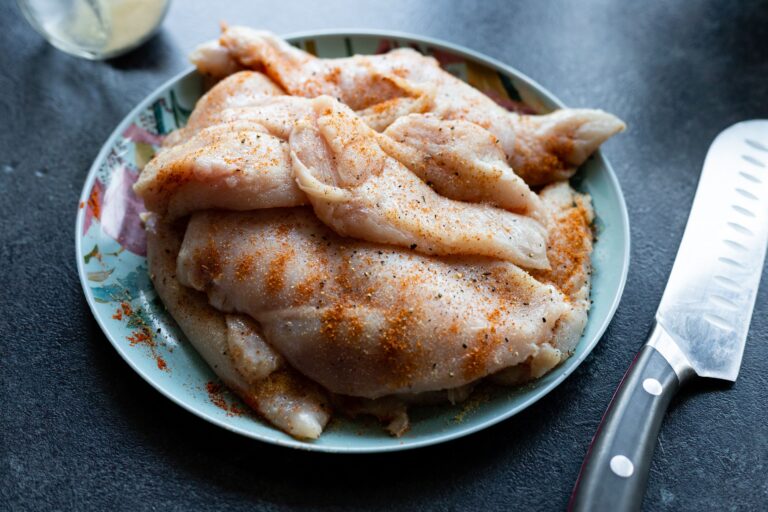
Fresh raw chicken ranges from pale pink to deep pinkish-red depending on the cut. A greyish or greenish tinge anywhere on the flesh is a sign of spoilage. Do not confuse the purplish-red colour of vacuum-packed chicken with spoilage — that colour is caused by a lack of oxygen in the packaging and disappears within minutes of opening. If the chicken doesn’t return to pink after 10 minutes of exposure to air, that’s a warning sign.
Texture
Fresh raw chicken should feel moist but not slimy. A sticky, tacky, or slimy film on the surface — even after rinsing (though rinsing is not recommended) — indicates bacterial growth and means the chicken is unsafe to eat. This sliminess is caused by the metabolic activity of spoilage bacteria and is distinct from the natural juices in the packaging.
Time
Even if raw chicken looks, smells, and feels fine at day 3, it should not be cooked and eaten. Pathogenic bacteria can be present in dangerous numbers with no visible or olfactory signs. If raw chicken has been in the fridge for more than 2 days, discard it — regardless of appearance. The 1–2 day window exists precisely because you cannot reliably detect unsafe bacterial levels by sensory evaluation alone.
SavoryTribe Kitchen Safety Tool
Fridge Food Life Guide
Look up safe fridge and freezer storage times for over 100 foods — meats, dairy, leftovers, and produce — all in one place.
How to Store Chicken in the Fridge Correctly
Proper storage doesn’t extend the 1–2 day window for raw chicken — that limit is biological, not logistical. What correct storage does is prevent cross-contamination of other foods in your fridge, maintain the quality of the chicken within its safe window, and ensure your fridge temperature stays consistently low. These steps apply from the moment you get home from the shop.
1
Store on the lowest shelf, in a tray or container
Raw chicken must always go on the lowest shelf of the fridge — never above ready-to-eat foods. If the packaging leaks, any drip falls downward. Place the chicken in a rimmed tray, plate, or sealed container to catch any juices. Even vacuum-sealed packages can weep liquid after a day in the fridge.
2
Keep it in the original packaging until use
Opening and repackaging raw chicken exposes it to more air and potential contamination. Keep it sealed in the original packaging until you’re ready to cook. If the original packaging is torn or leaking, transfer to a zip-lock bag with the air pressed out, or wrap tightly in cling film and place in a covered bowl.
3
Check your fridge temperature — not just assume it
The USDA recommends a fridge temperature of 35–38°F (2–3°C) for optimal food safety — colder than the common 40°F maximum. Most fridge dials are poorly calibrated. Use a standalone fridge thermometer to verify your actual temperature; place it in the centre of the middle shelf, not in the door.
4
Freeze immediately if you won’t cook it within 2 days
If you buy chicken and aren’t certain you’ll cook it within the 2-day window, freeze it the same day you buy it. Freezing halts bacterial growth entirely. Raw chicken breasts and thighs freeze well for up to 9 months. Portion and seal in freezer bags with the date written on the outside before freezing.
5
Cool cooked chicken within 2 hours before refrigerating
Cooked chicken should not sit at room temperature for more than 2 hours (1 hour if your kitchen is above 90°F / 32°C). Don’t put a hot dish directly into the fridge — it raises the internal temperature and puts other foods at risk. Spread it on a tray or divide into shallow containers to cool quickly, then refrigerate within the 2-hour window.
Storage: What Most People Get Wrong
❌ Common Mistake
Leaving raw chicken on the middle shelf, unwrapped
Juices drip onto foods below. Chicken is exposed to air and odours from other foods. Temperature at door-level shelves fluctuates by up to 5°F every time the fridge opens.
✅ Correct Method
Lowest shelf, sealed in a tray with original packaging intact
Any leaks are contained. No cross-contamination risk. Lowest shelf is coldest and most stable. Original packaging slows oxidation and moisture loss.
Label everything with the date: When raw chicken goes into the fridge, write the date on the packaging with a marker. When cooked chicken goes into a container, write the date on the lid. You’ll never have to guess how long something has been in there — and you’ll catch the 2-day and 4-day deadlines without thinking about it.
Freezing Chicken — What Changes and What Doesn’t
Freezing at 0°F (−18°C) stops bacterial growth completely. A chicken breast frozen properly on the day of purchase is just as safe to eat 9 months later as it was on day one — safety is not the issue with frozen chicken. Quality is. Freezer burn — the dry, greyish patches that develop on improperly sealed chicken — is caused by moisture loss through the packaging. It makes the meat dry and flavourless after cooking but doesn’t make it unsafe.
To prevent freezer burn, remove as much air as possible from the packaging before freezing. A vacuum sealer is ideal, but pressing a zip-lock bag nearly closed, then submerging it in a bowl of cold water to push out the remaining air before sealing, works just as well. Individual portions freeze and thaw faster than bulk packs and make meal planning significantly easier.
| Chicken Type | Best Freezer Quality Window | Safe Indefinitely? |
|---|---|---|
| Raw chicken pieces (breasts, thighs, legs) | Up to 9 months | Yes — quality declines after 9 months |
| Raw whole chicken | Up to 12 months | Yes — quality declines after 12 months |
| Raw ground chicken | 3–4 months | Yes — fat oxidises faster in ground meat |
| Cooked chicken (plain) | 2–6 months | Yes — texture softens significantly after 6 months |
| Cooked chicken in sauce | 4–6 months | Yes — sauce helps preserve moisture and texture |
| Frozen at a constant 0°F (−18°C). Food frozen at 0°F is safe indefinitely; the timelines above reflect when quality begins to noticeably decline, not safety limits. Source: USDA FoodSafety.gov. | ||
Key Takeaways
- Raw chicken lasts 1–2 days in the fridge at or below 40°F (4°C) — regardless of the sell-by date on the packaging.
- Cooked chicken lasts 3–4 days in the fridge; it must be cooled within 2 hours of cooking before refrigerating.
- The smell test alone is unreliable — Salmonella produces no odour in early stages. Evaluate smell, colour, texture, and time together.
- A slimy texture or sour smell means discard immediately — rinsing does not make contaminated chicken safe to eat.
- Store raw chicken on the lowest shelf of the fridge, in original packaging, in a rimmed container to catch drips.
- If you won’t cook raw chicken within 2 days, freeze it on the day of purchase — it keeps safely for up to 9 months.
- Use the Fridge Food Life Guide for safe storage times for 100+ other foods in your fridge and freezer.
Frequently Asked Questions
How long does raw chicken last in the fridge?
Raw chicken — whether breasts, thighs, legs, wings, or a whole bird — lasts 1–2 days in the fridge when stored at or below 40°F (4°C). This applies to all raw cuts regardless of the sell-by date on the packaging. The clock starts when the chicken enters your fridge, not when it was packaged at the facility. If you cannot cook raw chicken within 2 days, freeze it on the day of purchase to preserve it safely for up to 9 months.
How long does cooked chicken last in the fridge?
Cooked chicken lasts 3–4 days in the fridge when stored in an airtight container at or below 40°F (4°C). This applies to all forms of cooked chicken — roasted, poached, fried, grilled, or cooked in a sauce. Cooked chicken stored in sauce or broth tends to retain better texture and moisture throughout the 3–4 day window than plain cooked chicken. After 4 days, discard regardless of appearance or smell.
Can I eat chicken that’s been in the fridge for 5 days?
Cooked chicken that has been in the fridge for 5 days should be discarded. The USDA’s safe window is 3–4 days, and day 5 is outside that limit regardless of how it looks or smells. Pathogenic bacteria can be present in dangerous concentrations with no visible or olfactory signs. Raw chicken that has been in the fridge for 5 days is definitively unsafe and must be discarded — the safe window for raw chicken is only 1–2 days.
Is chicken still good after 3 days in the fridge?
Cooked chicken is still safe at day 3 — the 3–4 day window means it’s good through the end of day 4. Raw chicken at day 3 is past its safe limit of 1–2 days and should be discarded. The distinction between raw and cooked matters significantly here. If you’re unsure which applies to you, apply the more conservative rule: discard raw chicken after 2 days, cooked chicken after 4 days.
Does marinating chicken in the fridge extend its shelf life?
No. Marinating raw chicken in an acidic marinade — citrus, vinegar, wine — does not extend its safe fridge life beyond the standard 1–2 day window. While acid inhibits some surface bacteria, it does not penetrate deeply enough to affect the bacterial load throughout the meat. Marinated chicken follows the same 1–2 day rule as unmarinated raw chicken. If you want to marinate chicken in advance, freeze it in the marinade and defrost in the fridge the day before cooking.
What does bad chicken smell like?
Spoiled chicken typically produces a sour, sharp, or ammonia-like odour. Fresh raw chicken has a very faint, neutral smell — or no smell at all. Any odour that makes you pause or pull back is a sign of spoilage. Cooked chicken that has gone off develops a sour or off smell distinctly different from how it smelled when freshly cooked. The absence of a bad smell is not confirmation the chicken is safe — dangerous bacterial levels can exist before any odour develops.
Can I refreeze chicken that has already been defrosted?
You can safely refreeze raw chicken that was defrosted in the fridge — not chicken thawed on the counter or in water. Fridge-defrosted chicken can be refrozen within 1–2 days of thawing, but there will be a noticeable loss of moisture and texture with each freeze-thaw cycle. Once raw chicken has been defrosted and cooked, the cooked chicken can also be frozen for up to 4 months. Never refreeze chicken that was thawed at room temperature — it entered the unsafe temperature zone during thawing.
SavoryTribe Kitchen Safety Tool
Fridge Food Life Guide
Not just chicken — look up safe fridge and freezer storage windows for beef, pork, fish, dairy, eggs, and over 100 more foods.