The Best Fluffy Pancakes recipe you will fall in love with. Full of tips and tricks to help you make the best pancakes.

Cooking Guide
How to Scale a Recipe Up or Down
Scaling a recipe is mostly simple multiplication — but a handful of ingredients break that rule. This guide covers the exact formula, a complete measurement conversion table, and the leavening adjustment that stops baked goods from tasting metallic or collapsing.
⚡ Quick answer
To scale a recipe: divide your target servings by the original servings to get your scaling factor, then multiply every ingredient by that number.
Example: a recipe serving 4, scaled to serve 12, uses a factor of 3 (12 ÷ 4 = 3). Multiply every ingredient by 3. The key exception: baking powder and baking soda should only be scaled to 75% of the calculated amount at ×2 and above. Salt and strong spices follow the same reduced rule. Everything else scales directly.
The formula is straightforward: Scaling Factor = Target Servings ÷ Original Servings. If you want to double a recipe that serves 4, your scaling factor is 2. Scaling the same recipe to serve 20 gives a factor of 5. From there, you multiply every ingredient by that number — and for most ingredients in most recipes, that’s the whole job done.
The problem is that a few ingredients don’t behave proportionally at larger volumes. Leavening agents are the most critical: too much baking powder or baking soda causes over-rising followed by collapse, leaves a bitter metallic aftertaste, and changes the texture of the finished product. This doesn’t dramatically affect a simple doubling, but it becomes a real problem at ×3 and above. Salt and spices also overwhelm at full multiplication — the palate doesn’t scale linearly the way a measuring cup does.
Scaling cooking recipes (soups, stews, stir-fries, sauces) is more forgiving than scaling baking recipes. In cooking, you can taste and adjust at every stage. In baking, the chemistry is set before anything hits the oven. Most of the nuance in this guide applies specifically to baking — if you’re scaling a soup or a marinade, multiply everything and taste at the end.
÷ then ×
The two-step scaling formula
75%
Max leavening to use when doubling a baked recipe
Same
Oven temperature — never increases with batch size
−25%
Reduce salt and strong spices from the calculated amount
Scaled Measurement Conversion Table
Use this table when converting common measurements across the most frequent scaling factors. The first column is the original amount in the recipe. The remaining columns show the exact scaled amount. For any measurement not listed, multiply the original by your scaling factor and use the nearest practical measure.
| Original Amount | ×1.5 | ×2 (double) | ×3 (triple) | ×4 |
|---|---|---|---|---|
| 1 cup | 1½ cups | 2 cups | 3 cups | 4 cups |
| ¾ cup | 1 cup + 2 tbsp | 1½ cups | 2¼ cups | 3 cups |
| ½ cup | ¾ cup | 1 cup | 1½ cups | 2 cups |
| ⅓ cup | ½ cup | ⅔ cup | 1 cup | 1⅓ cups |
| ¼ cup | 6 tbsp | ½ cup | ¾ cup | 1 cup |
| 1 tablespoon | 1½ tbsp | 2 tbsp | 3 tbsp | ¼ cup |
| 1 teaspoon | 1½ tsp | 2 tsp | 1 tbsp | 4 tsp |
| ½ teaspoon | ¾ tsp | 1 tsp | 1½ tsp | 2 tsp |
| ¼ teaspoon | ⅜ tsp | ½ tsp | ¾ tsp | 1 tsp |
| Standard US volume measurements. 1 cup = 16 tablespoons = 48 teaspoons. Use this table for all direct-scaling ingredients. Apply the separate leavening rules below for baking powder and baking soda. | ||||
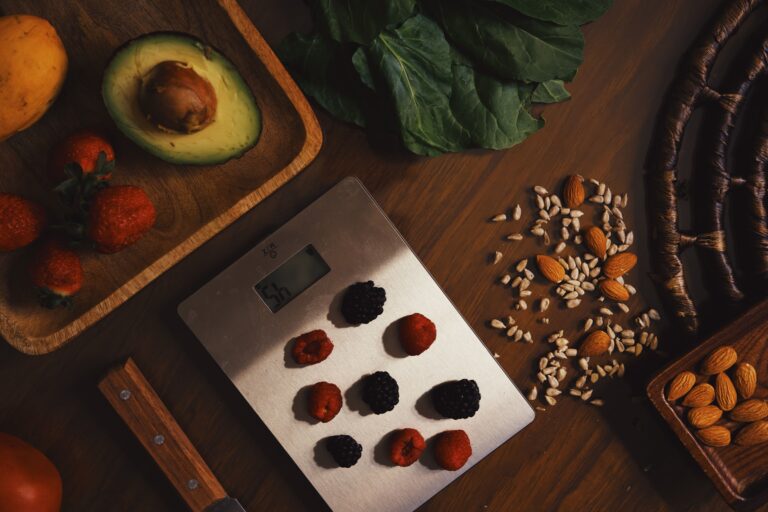
Skip fractions entirely by weighing: Awkward amounts like ⅜ tsp or 6 tbsp disappear when you use grams. Multiply the gram weight by your scaling factor and you’re done. Use our Ingredient Unit Converter to get accurate gram weights for any ingredient before you scale.
The Ingredients That Don’t Scale Linearly
Four ingredient types need adjustment when scaling beyond ×1.5. Applying the standard multiplier to all of them produces noticeably worse results in baked goods — and at large scale, it can ruin the dish entirely.
Baking Powder and Baking Soda
These are the most important scaling exception. Both agents release carbon dioxide gas chemically — and the reaction isn’t proportional to volume. Larger batches retain gas better and their dough provides more structural support, so less leavening is needed per unit. Too much baking powder creates a sharp metallic taste and causes the centre to collapse after an initial over-rise. The rule: use 75% of the calculated leavening amount when scaling at ×2 or above.
| Original Amount | Scale Factor | Calculated Amount | Use This Instead |
|---|---|---|---|
| 1 tsp baking powder | ×1.5 | 1½ tsp | 1¼ tsp |
| 1 tsp baking powder | ×2 | 2 tsp | 1¾ tsp |
| 1 tsp baking powder | ×3 | 3 tsp | 2¼ tsp |
| 1 tsp baking powder | ×4 | 4 tsp | 3 tsp |
| 1 tsp baking soda | ×2 | 2 tsp | 1½ tsp |
| 1 tsp baking soda | ×3 | 3 tsp | 2 tsp |
| At ×1.5, the reduction is minor. At ×2 and above, it’s critical. Baking soda is roughly 3–4× more potent than baking powder — always use less of it in any recipe, scaled or not. | |||
Salt
Salt perception is non-linear. A dish serving 20 doesn’t need 5× the salt of one serving 4 — the palate simply doesn’t work that way. Start with 75% of the calculated salt amount, taste before serving, and add more in small increments. This is especially important for soups and braises where salt concentrates as the liquid reduces during cooking.
Spices, Herbs, and Extracts
Strong spices — chilli, cumin, cloves, cinnamon — can overpower a dish when fully multiplied at large scale. Start at 75% of calculated and taste before adding more. Vanilla extract follows the same rule: at ×3 or ×4, full multiplication makes it taste sharp and artificial. Dried herbs are slightly more forgiving than spices but still benefit from the same conservative starting point.
SavoryTribe Cooking Tool
Recipe Scaler
Enter your ingredient amounts and your target multiplier — the calculator handles all the conversions instantly so you can start cooking, not calculating.
How to Scale a Recipe: Step by Step
1
Calculate your scaling factor
Divide the number of servings you need by the number of servings in the original recipe. Serving 18 from a recipe for 6 gives a factor of 3. If the recipe doesn’t list a serving count, estimate from the yield: a standard cake serves 8–12, a batch of cookies yields 24–48. Use the yield number as your denominator.
2
Multiply every direct-scaling ingredient
Apply your factor to all main ingredients: flour, sugar, butter, eggs, milk, oil, vegetables, proteins, and liquids. Use the conversion table above to translate the result into measurable amounts. Write the new amounts directly on the recipe before you start — it’s easy to lose track mid-cook when you’re working from memory.
3
Apply the 75% rule to leavening, salt, and spices
Calculate the full scaled amount for baking powder, baking soda, salt, and strong spices — then use 75% of that number. Mark these separately on your recipe (a different ink colour helps) so you don’t accidentally use the full multiplied amount during prep. For cooking recipes, just add salt and spices conservatively and taste at the end.
4
Adjust pans and check cooking time early
For baking: use additional pans of the same original size rather than one larger pan. This keeps batter depth consistent, which is what actually controls cooking time. Use the same oven temperature and begin checking for doneness 10 minutes before the original time. For stovetop recipes: cook in batches at the same heat level — overcrowding a pan causes steaming instead of browning and dramatically changes the result.
How to Scale a Recipe Down
The same formula works in reverse. Halving a recipe uses a factor of 0.5 — multiply every ingredient by 0.5, or simply divide by 2. Scaling to a third uses 0.33. The leavening rule still applies: for a half batch, use about 60% of the original leavening amount (not 50%), since very small quantities of baking powder lose effectiveness when reduced too aggressively.
The practical challenge when scaling down is measuring small amounts precisely. ⅛ teaspoon is the smallest increment on most measuring spoon sets. For anything below that — a pinch of saffron, a very small amount of a strong spice — switching to grams on a kitchen scale is the most accurate approach. A scale that reads in tenths of a gram handles quantities that volume measures simply can’t.
Don’t scale down into the same pan: Halving a batter and baking it in the original pan produces a flat, dense, underbaked result. Move to a smaller pan that matches the reduced batter depth — a half batch in a standard loaf recipe typically moves from a 9×5 inch pan to an 8×4 inch pan, keeping the same batter height and the same cooking time.
The Most Common Scaling Mistake
❌ The Wrong Way
Multiply everything equally
Applying the same scaling factor to every ingredient including baking powder, baking soda, and salt. At ×3 or ×4, this produces metallic-tasting, over-salted baked goods with poor rise and collapsed centres.
✅ The Right Way
Use the 75% rule for leavening
Multiply all direct ingredients at full rate. Then reduce baking powder, baking soda, salt, and strong spices to 75% of the calculated amount. Taste and adjust seasoning before serving.
Key Takeaways
- The scaling formula is: Scaling Factor = Target Servings ÷ Original Servings. Multiply every ingredient by that factor.
- Baking powder and baking soda should be reduced to 75% of the calculated amount at ×2 and above — never fully multiplied.
- Salt and strong spices follow the same rule: start at 75% of calculated, then taste and adjust.
- Oven temperature never changes when scaling up. Use additional pans of the same size, not a larger pan.
- Start checking for doneness 10 minutes before the original time when baking a scaled recipe.
- When scaling down, use a smaller pan to maintain batter depth — not the original pan with less batter.
- Use the SavoryTribe Recipe Scaler to calculate every ingredient amount for any multiplier instantly.
Frequently Asked Questions
How do I calculate the scaling factor for a recipe?
Divide the number of servings you want by the number of servings in the original recipe. If the original serves 6 and you need to serve 18, your scaling factor is 3 (18 ÷ 6 = 3). Multiply every ingredient by 3. If the recipe doesn’t list a serving count, use the stated yield instead — a cookie recipe yielding 24 cookies uses 24 as the denominator. For a casual recipe with no yield listed at all, estimate based on portion size and pan size.
Does doubling a recipe double the cooking time?
No. Cooking time is determined by thickness and density, not total quantity. Ten chicken breasts take the same time to bake as one — provided they’re the same size and not overcrowded. For baking, use the same temperature and same-size pans, and begin checking for doneness about 10 minutes before the original time. For stovetop recipes, cook in batches rather than filling a larger pot — overcrowding causes steaming instead of browning and increases total cook time significantly.
Why shouldn’t baking powder be scaled at the same rate as other ingredients?
Baking powder works by releasing carbon dioxide gas when it contacts moisture and heat. At larger batch sizes, the dough or batter provides more structural support and retains gas more efficiently — so less leavening is needed per unit. Too much baking powder causes rapid over-rising followed by collapse, creates a bitter metallic taste, and produces a gummy or sunken texture. The standard correction is to use 75% of the calculated leavening amount when scaling at ×2 or more. Baking soda is 3–4× more potent than baking powder, so the same rule applies even more strictly.
Can every recipe be scaled, or are some better left as-is?
Most recipes scale well. The ones that don’t: soufflés and choux pastry (which rely on precise egg-to-structure ratios), candy and caramel recipes (where sugar temperature is everything and a larger batch changes how quickly it heats), and any recipe that’s built around a very specific pan-to-batter ratio. Bread scales reliably for flour, water, and fat — but yeast doesn’t need to increase proportionally, since a larger dough mass still ferments fully; it just takes slightly longer to rise.
How do I scale a recipe down to half?
Multiply every ingredient by 0.5. Use a smaller pan — a half batch of a 9×13 casserole fits in an 8×8 pan; a half loaf recipe moves from a 9×5 inch to an 8×4 inch pan. Cooking time is the same if the food is the same thickness; if the pan is shallower, check for doneness 5–10 minutes earlier. For leavening: use about 60% of the original amount (not 50%) since very small quantities of baking powder lose potency when reduced too aggressively.
What’s the easiest way to handle awkward scaled measurements?
Switch to grams. Volume fractions like ⅜ tsp or 6 tbsp are annoying to measure precisely, but gram weights are easy to multiply. If a recipe calls for ¾ cup of all-purpose flour (94g) and you’re tripling it, you need 282g — straightforward on any kitchen scale. For amounts under 5g (small spice quantities), a scale that reads in 0.1g increments gives the most control. Our Ingredient Unit Converter converts any cup or spoon measurement into grams instantly.
Does oven temperature change when baking a larger batch?
No — oven temperature stays the same. What changes is the number of pans and their position in the oven. If baking multiple pans at once, rotate them halfway through to account for uneven heat distribution (most home ovens are hotter at the back and on certain racks). If you’ve used a larger pan that causes the batter to spread thinner, check doneness 5 minutes earlier — thinner batter at the edges cooks faster. The internal temperature target for the baked good (if applicable) never changes regardless of batch size.
SavoryTribe Cooking Tool
Recipe Scaler
Type in your ingredients and your multiplier — the tool calculates every scaled amount instantly, including the leavening and unit conversions.