The Best Fluffy Pancakes recipe you will fall in love with. Full of tips and tricks to help you make the best pancakes.

Baking Tips & Conversions
How Many Tablespoons in a Cup?
There are exactly 16 tablespoons in 1 cup. That means ½ cup = 8 tablespoons, ¼ cup = 4 tablespoons, and ⅓ cup = 5 tablespoons + 1 teaspoon. Every fraction you’ll ever need is in the chart below — plus why the number differs for UK recipes.
⚡ Quick answer
There are 16 tablespoons in 1 US cup. Half a cup is 8 tablespoons. A quarter cup is 4 tablespoons.
This applies to the US customary cup (240ml). UK recipes use a slightly larger 250ml cup, which equals approximately 16.7 tablespoons — close enough that the difference is negligible for most recipes, but worth knowing for precise baking. Australian tablespoons are also different: 20ml instead of the US 15ml, which changes the maths entirely. This guide covers all of them.
The tablespoon-to-cup question comes up in two situations: you’re scaling a recipe and need to convert a cup measurement to tablespoons because you only have spoons handy, or you’re halving a recipe and need to know what fraction of a tablespoon replaces ⅛ of a cup. Both are exactly the kind of mid-cooking maths that causes errors when you’re in a rush.
The number 16 is the anchor for all of this. One US cup = 16 tablespoons. Every other conversion is just division from there: ½ cup is 16 ÷ 2 = 8 tablespoons, ¼ cup is 16 ÷ 4 = 4 tablespoons. The only fraction that doesn’t divide cleanly is ⅓ cup — which equals 5 tablespoons plus 1 teaspoon, because ⅓ of 16 is 5.333, and that 0.333 tablespoon converts to exactly 1 teaspoon (since 1 tablespoon = 3 teaspoons).
The complication arrives when you’re working from a UK or Australian recipe. Both countries use the word “cup” and “tablespoon” but define them differently. A UK cup is 250ml vs the US 240ml. An Australian tablespoon is 20ml vs the US/UK 15ml. The differences are small enough to ignore in most savoury recipes but can affect delicate bakes where volume ratios matter. This guide covers the exact numbers for every system so you’re never guessing mid-recipe.
16
Tablespoons in 1 US cup
240ml
Volume of 1 US cup
15ml
Volume of 1 US tablespoon
3 tsp
Teaspoons in 1 tablespoon
Cups to Tablespoons — Complete Conversion Chart
The table below covers every cup fraction you’ll encounter in recipes — from ⅛ cup all the way up to 4 cups — with exact tablespoon equivalents, teaspoon cross-references, and millilitre values. Bookmark this page or screenshot the table for your kitchen.
| Cups | Tablespoons (US) | Teaspoons | Millilitres | Fluid Ounces |
|---|---|---|---|---|
| ⅛ cup | 2 tbsp | 6 tsp | 30ml | 1 fl oz |
| ¼ cup | 4 tbsp | 12 tsp | 60ml | 2 fl oz |
| ⅓ cup | 5 tbsp + 1 tsp | 16 tsp | 79ml | 2.7 fl oz |
| ⅜ cup | 6 tbsp | 18 tsp | 90ml | 3 fl oz |
| ½ cup | 8 tbsp | 24 tsp | 120ml | 4 fl oz |
| ⅔ cup | 10 tbsp + 2 tsp | 32 tsp | 158ml | 5.3 fl oz |
| ¾ cup | 12 tbsp | 36 tsp | 177ml | 6 fl oz |
| 1 cup | 16 tbsp | 48 tsp | 240ml | 8 fl oz |
| 1½ cups | 24 tbsp | 72 tsp | 360ml | 12 fl oz |
| 2 cups | 32 tbsp | 96 tsp | 480ml | 16 fl oz |
| 3 cups | 48 tbsp | 144 tsp | 720ml | 24 fl oz |
| 4 cups (1 quart) | 64 tbsp | 192 tsp | 960ml | 32 fl oz |
| Based on US customary measurements: 1 cup = 240ml, 1 tablespoon = 15ml, 1 teaspoon = 5ml. Values for ⅓ cup and ⅔ cup are rounded to nearest teaspoon. | ||||
⅛ cup = 2 tbsp
¼ cup = 4 tbsp
⅓ cup = 5 tbsp + 1 tsp
½ cup = 8 tbsp
¾ cup = 12 tbsp
1 cup = 16 tbsp
SavoryTribe Baking Tool
Ingredient Unit Converter
Need to convert any measurement mid-recipe? Cups to tablespoons, grams to ounces, millilitres to teaspoons — our free converter handles 30+ ingredients and units instantly.
US vs UK vs Australian Measurements — What Changes
The word “cup” appears in recipes from the United States, United Kingdom, Australia, Canada, and New Zealand — but the volume it refers to is not identical across all of them. For most savoury cooking, the differences are negligible. For baking, especially at scale, they matter.
| Country | 1 Cup | 1 Tablespoon | Tbsp per Cup | Notes |
|---|---|---|---|---|
| United States | 240ml | 15ml | 16 tbsp | Most common standard for recipes worldwide |
| United Kingdom | 250ml | 15ml | 16.7 tbsp | Cup rarely used; UK recipes typically use weight (grams) |
| Australia | 250ml | 20ml | 12.5 tbsp | Larger tablespoon — most significant difference from US |
| Canada | 250ml | 15ml | 16.7 tbsp | Very close to US; minor difference in cup size only |
| New Zealand | 250ml | 15ml | 16.7 tbsp | Same as Australian cup, but uses 15ml tablespoon |
| The Australian tablespoon (20ml) is the most important difference to know. An Australian recipe calling for 4 tablespoons equals 80ml — but 4 US tablespoons is only 60ml. A 25% difference that can noticeably affect a bake. | ||||
Australian tablespoons are 20ml, not 15ml: If you’re following an Australian recipe and measuring with US spoons, every “tablespoon” you measure is 25% smaller than the recipe intends. For a recipe that calls for 4 tablespoons, you’re 20ml short — which can matter significantly for leavening agents, oils, and liquids. When in doubt, convert to millilitres and measure by volume.
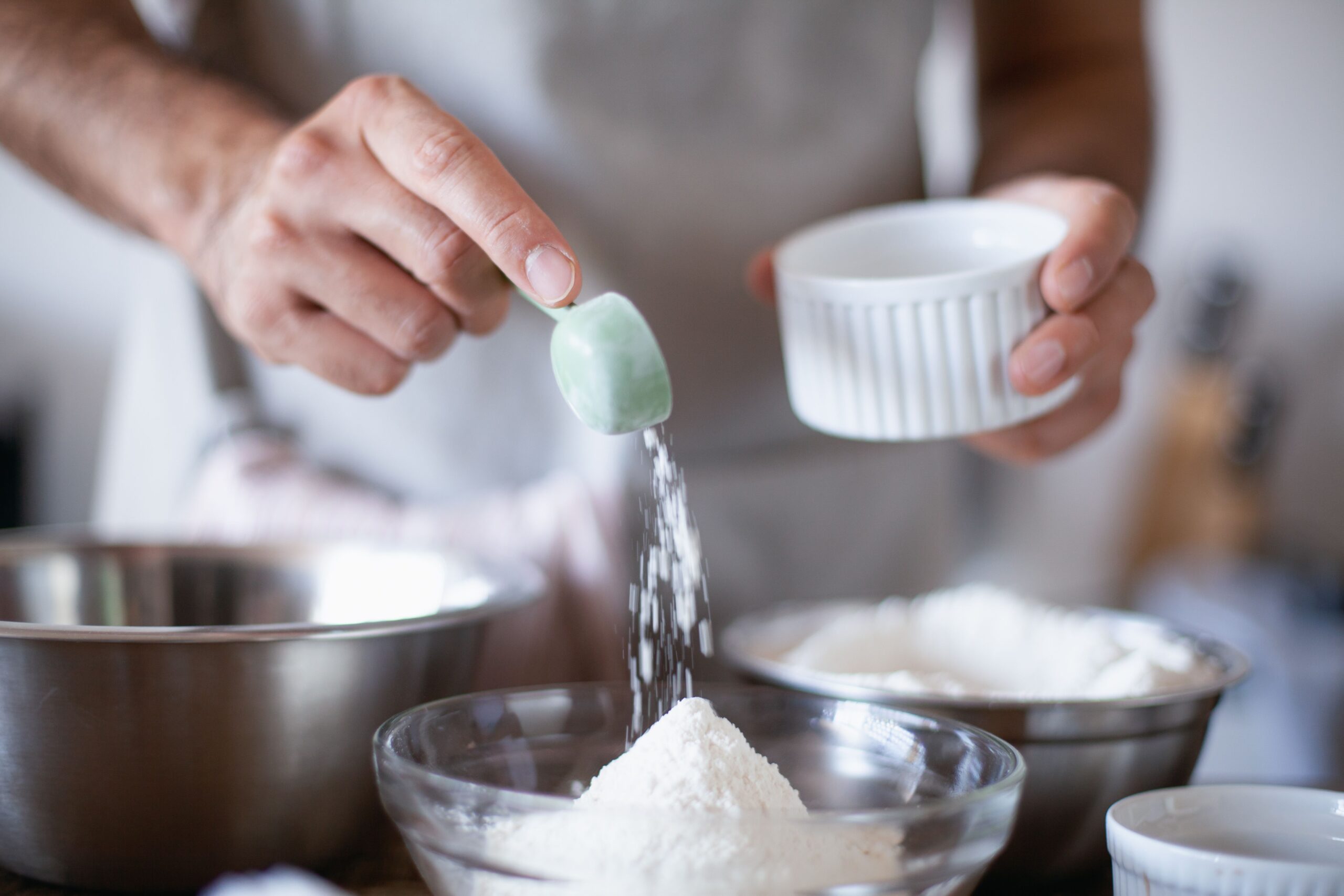
How to Measure Tablespoons Correctly
The conversion numbers in the table above assume level measurements — not heaped, not rounded, not packed. A heaped tablespoon of flour can hold 20–30% more than a levelled one. In a recipe that calls for 8 tablespoons (½ cup) of flour, the difference between consistently level spoons and consistently heaped ones can mean an extra 15–20g of flour — enough to make a cake noticeably denser or a sauce thicker than intended.
1
Use a proper measuring spoon — not a serving spoon
Standard serving spoons, dessert spoons, and soup spoons are not calibrated to any specific volume and vary significantly between brands. Use a dedicated measuring spoon set marked in tablespoons and teaspoons. For the best consistency, metal spoons are preferable to plastic, which can warp over time.
2
Spoon dry ingredients in — don’t scoop
For dry ingredients like flour, cocoa powder, and spices, use a smaller spoon or scoop to fill the measuring tablespoon, then level the top with a straight edge (the back of a knife or a ruler). Scooping directly from the bag compresses the ingredient and adds extra volume that the recipe doesn’t account for.
3
For liquids, check at eye level
Liquids form a meniscus — a slight curve at the surface — which makes measuring from above inaccurate. Set your tablespoon on a flat surface and view it at eye level to ensure the liquid reaches the brim evenly. This matters most for liquids like vanilla extract, liquid sweeteners, and oils where tablespoon quantities are small and precise.
4
Measure sticky ingredients over the bowl
For thick, sticky tablespoon measures — honey, peanut butter, tomato paste — spray the measuring spoon with cooking spray first, or measure directly over the bowl so every bit falls in cleanly. Nothing is more frustrating than 2 tablespoons of honey that end up half on the spoon and half on the counter.
When tablespoons become impractical, switch to a scale: Measuring out 16 tablespoons (1 cup) of an ingredient one spoon at a time is tedious and introduces cumulative error. If a recipe calls for more than 4 tablespoons of a single ingredient, weigh it instead — it’s faster and more accurate. Use SavoryTribe’s Ingredient Unit Converter to get the gram weight of any tablespoon amount instantly.
Halving and Doubling Recipes — The Tablespoon Maths
The most common reason someone needs to convert cups to tablespoons isn’t curiosity — it’s that they’re scaling a recipe and end up with an awkward fraction like ⅙ cup or ⅛ cup that isn’t marked on their measuring cup. The table below covers the most frequently needed scaling conversions so you can work through the maths without reaching for a calculator.
| Original Amount | Halved | Doubled | In Tablespoons (halved) |
|---|---|---|---|
| 1 cup | ½ cup | 2 cups | 8 tbsp |
| ¾ cup | 6 tbsp | 1½ cups | 6 tbsp |
| ½ cup | ¼ cup | 1 cup | 4 tbsp |
| ⅓ cup | 2 tbsp + 2 tsp | ⅔ cup | 2 tbsp + 2 tsp |
| ¼ cup | 2 tbsp | ½ cup | 2 tbsp |
| ⅛ cup | 1 tbsp | ¼ cup | 1 tbsp |
| 1 tbsp | 1½ tsp | 2 tbsp | 1½ tsp |
| For complex scaling (tripling, ¾ batch), SavoryTribe’s Recipe Scaler handles the maths automatically for every ingredient at once. | |||
❌ Common mistake
Using a serving spoon as a “tablespoon”
Everyday serving spoons hold anywhere from 10ml to 25ml — a huge range that makes them useless for recipe measurements. A serving spoon that looks like “about a tablespoon” can be 50% over or under. Always use a calibrated measuring spoon.
✅ Best practice
Use a scale for 4+ tablespoons
Once you’re measuring 4 or more tablespoons of one ingredient, a kitchen scale is faster and more accurate than counting spoons. 4 tablespoons of all-purpose flour = 30g. 8 tablespoons of butter = 113g. Weigh it once and move on.
Key Takeaways
- There are 16 tablespoons in 1 US cup — this is the single number worth memorising.
- ½ cup = 8 tbsp · ¼ cup = 4 tbsp · ¾ cup = 12 tbsp · ⅓ cup = 5 tbsp + 1 tsp.
- 1 US tablespoon = 15ml. 1 US cup = 240ml.
- Australian tablespoons are 20ml — 25% larger than US tablespoons. Adjust when following Australian recipes with US spoons.
- UK and Canadian cups are 250ml (vs 240ml US) — a minor difference that rarely affects recipes.
- Always use level tablespoon measures for dry ingredients — heaped spoons add 20–30% extra volume.
- For 4+ tablespoons of a single ingredient, weighing on a scale is faster and more accurate than counting spoons.
- Use SavoryTribe’s Ingredient Unit Converter to convert any tablespoon amount to grams, millilitres, or cups instantly.
Frequently Asked Questions
How many tablespoons in ¼ cup?
There are 4 tablespoons in ¼ cup. This is one of the most useful conversions to memorise because ¼ cup appears constantly in recipes for liquids (oil, milk, broth) and dry ingredients (flour, sugar, cocoa). In millilitres, ¼ cup = 60ml. If you’re working in teaspoons, ¼ cup = 12 teaspoons. For anything stickier than water, 4 tablespoons is awkward to measure accurately — 60ml on a liquid measuring jug or 60g on a scale is quicker.
How many tablespoons in ⅓ cup?
⅓ cup equals 5 tablespoons plus 1 teaspoon. This is the trickiest common fraction because ⅓ of 16 doesn’t divide evenly — it gives 5.333 tablespoons. The 0.333 of a tablespoon is exactly 1 teaspoon (since 1 tablespoon = 3 teaspoons, and ⅓ of that is 1 teaspoon). In millilitres, ⅓ cup = approximately 79ml. If your recipe calls for ⅔ cup, that’s 10 tablespoons plus 2 teaspoons.
How many tablespoons in ½ cup?
There are 8 tablespoons in ½ cup. Half a US cup is 120ml. In teaspoons, ½ cup = 24 teaspoons. This is one of the cleanest and most frequently needed conversions in baking — ½ cup of butter, ½ cup of sugar, ½ cup of milk all appear constantly in standard cake and biscuit recipes. At 8 tablespoons, it’s worth knowing that this is exactly half a standard stick of US butter (which is 8 tablespoons / 113g / ½ cup).
Is a tablespoon the same in the US and UK?
Yes — a US tablespoon and a UK tablespoon are both 15ml. The difference between US and UK measurements is in the cup size: a US cup is 240ml while a UK cup is 250ml. In practice, UK recipes rarely use cups at all — British baking recipes almost universally use weight in grams, which is why you’ll see “125g flour” rather than “1 cup flour” in a British cookbook. The tablespoon does appear in UK recipes for small quantities of oil, vinegar, and seasonings, and it’s the same 15ml as the US measure.
How many teaspoons are in a tablespoon?
There are 3 teaspoons in 1 tablespoon — in the US, UK, Canada, and New Zealand. One teaspoon = 5ml; one tablespoon = 15ml; 15 ÷ 5 = 3. The exception is Australia, where 1 tablespoon = 20ml and 1 teaspoon = 5ml, giving 4 teaspoons per Australian tablespoon. This teaspoons-per-tablespoon difference is why Australian recipes can look slightly different in their leavening quantities — what looks like less baking powder is often just the larger tablespoon measure at work.
How many tablespoons in ¾ cup?
There are 12 tablespoons in ¾ cup. In millilitres, ¾ cup = 177ml. In teaspoons, 36. This conversion comes up frequently with larger baking recipes — ¾ cup of sugar, ¾ cup of yoghurt, ¾ cup of chocolate chips. Twelve tablespoons is a large number to measure one spoon at a time, so if your recipe calls for ¾ cup of something you use frequently, it’s worth weighing it: ¾ cup of all-purpose flour = approximately 94g; ¾ cup of granulated sugar = approximately 150g.
What is ⅛ cup in tablespoons?
⅛ cup equals 2 tablespoons exactly — 30ml or 6 teaspoons. This is the smallest standard cup fraction and often appears in recipes for small quantities of oil, acid (lemon juice, vinegar), or liquid flavourings. ⅛ cup is also a helpful crosscheck: if your measuring cup only goes down to ¼ cup, fill it halfway to the ¼ cup line to approximate ⅛ cup, or simply measure 2 level tablespoons directly.
Does it matter if I use cups or tablespoons to measure?
Both give you the same volume if done correctly, so the method itself doesn’t matter — accuracy does. The risk with measuring in multiple tablespoons rather than one cup measure is cumulative error: each slightly heaped or under-filled spoon adds up across 8 or 16 measurements. A single cup measure is faster and introduces error only once. For anything over 4 tablespoons of a single ingredient, use a cup measure if you have one, or weigh the ingredient on a scale for the most accurate result. Use our Ingredient Unit Converter to find the gram weight of any tablespoon or cup amount.
SavoryTribe Baking Tool
Ingredient Unit Converter
Convert tablespoons, cups, grams, ounces, and millilitres for 30+ baking ingredients. No sign-up, no ads, instant results.